
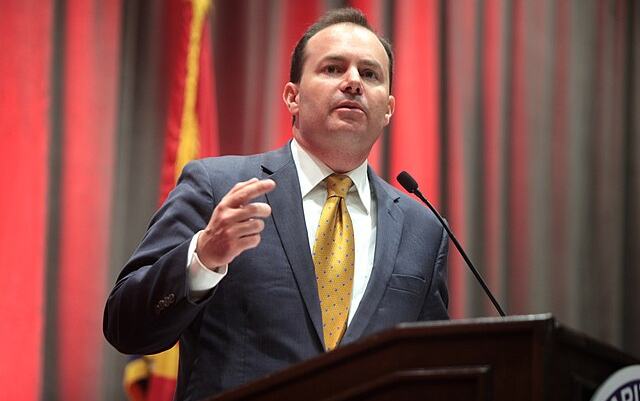
Senate Republicans launched a marathon debate on Tuesday on the SAVE America Act, President Donald Trump's top legislative priority aimed at bolstering election integrity through stricter voter verification rules.
The chamber approved a motion to proceed by a 51-48 vote, with one Republican, Sen. Lisa Murkowski of Alaska, joining Democrats in opposition. Majority Leader John Thune of South Dakota initiated the session, framing the bill as common-sense reform amid concerns over non-citizen voting. The debate, which could extend through the weekend, features extended floor speeches rather than a traditional talking filibuster.
The SAVE America Act, also known as the SAVE Act, amends the National Voter Registration Act of 1993 to require documentary proof of U.S. citizenship for individuals registering to vote in federal elections. Acceptable documents include REAL ID-compliant identification indicating citizenship, a U.S. passport, or a birth certificate paired with a photo ID. States must establish processes to verify citizenship, remove non-citizens from voter rolls using federal data sources like Department of Homeland Security records, and face penalties for non-compliance, including private lawsuits and criminal charges for election officials.
Proponents, including Sens. Mike Lee of Utah and Chip Roy of Texas, the House sponsor, argue the measure closes loopholes exploited by non-citizens and enjoys broad public support, with polls showing 80% to 95% of Americans favoring voter ID requirements, including majorities of Democrats. Republicans cite examples of non-citizen registrations, such as 40 cases in Oklahoma, and link the push to record illegal immigration under prior administrations.
President Trump has aggressively promoted the bill, calling mail-in voting "corrupt as hell" and vowing not to endorse senators who oppose it. He described it as essential to prevent cheating and secure Republican victories in upcoming midterms. The House passed an earlier version, H.R. 22, last year, sending it to the Senate.
Democrats, led by Minority Leader Chuck Schumer of New York, decry the legislation as voter suppression that could disenfranchise millions, particularly married women whose names changed, seniors, students, rural voters, and naturalized citizens lacking easy access to documents. They argue it ends online and mail-in registration in many states, burdens election administration, and relies on unsubstantiated fraud claims, noting rare prosecutions for non-citizen voting.
Sens. Patty Murray of Washington and Alex Padilla of California highlighted potential impacts on 70 million women and the risk of erroneous purges via DHS data sharing. With Republicans holding 53 seats, the bill faces a 60-vote filibuster threshold and appears unlikely to pass in its current form, though GOP leaders aim to force Democrats on record.
The debate occurred against a backdrop of partial government shutdowns over DHS funding and ongoing border security disputes. As of Wednesday morning, proceedings continued with no vote scheduled.

Comments
No comments yet. Be the first to share your thoughts.