
A major Republican political action committee is unveiling an aggressive $342 million strategy aimed at defending its Senate majority and targeting vulnerable Democrat-held seats ahead of the 2026 midterm elections.
The Senate Leadership Fund (SLF) plans to focus on eight battleground states, including North Carolina, Maine, Iowa, and Alaska, for defense, while targeting Democratic seats in Michigan, Georgia, and New Hampshire. In a social media post on X, the PAC described the plan as “our largest commitment ever” and highlighted its “aggressive offensive strategy” in three Democrat-held swing states, the most in the group’s history.
The SLF intends to reserve early television ad placements to secure lower rates before campaigns formally launch in September. Of the $342 million, roughly $236 million will defend five Republican-held seats, while about $106 million is earmarked for efforts to flip Democrat seats.
“Our job is to preserve the majority,” said Alex Latcham, SLF executive director, in an interview with The New York Times. Republicans currently hold 53 Senate seats, meaning Democrats would need a net gain of four to take control, assuming Vice President JD Vance casts tie-breaking votes.
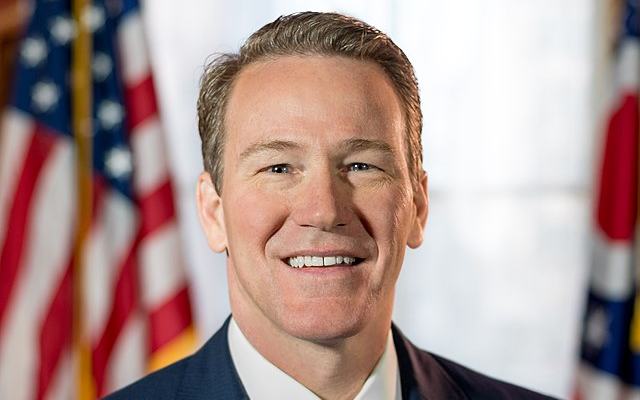
The largest single-state investment is expected in Ohio, with $79 million planned to defend GOP Sen. Jon Husted’s seat against a challenge from former Sen. Sherrod Brown. North Carolina follows at $71 million, with a high-profile contest between former Democrat Gov. Roy Cooper and Republican Michael Whatley.
Other defensive spending includes $29 million in Iowa for GOP Rep. Ashley Hinson, R-Iowa, $15 million in Alaska for Sen. Dan Sullivan, R-Alaska, and additional allocations for Maine. On the offensive, SLF is targeting Michigan ($45 million), Georgia ($44 million), and New Hampshire ($17 million), supporting former Sen. John Sununu in the GOP primary.
Texas is not currently part of the SLF plan, but could be added if the race becomes competitive.
The PAC began 2026 with roughly $100 million on hand and aims to raise an additional $250 million. By contrast, Democrats’ leading Senate super PAC started the cycle with $36 million in reserves and some debt, leaving Republicans with a substantial financial advantage.

Comments
No comments yet. Be the first to share your thoughts.