
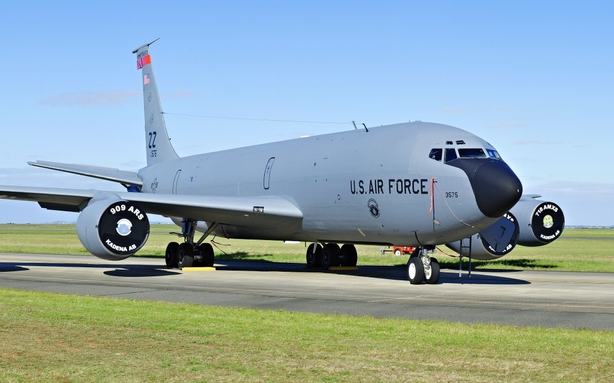
Six U.S. service members were killed after a Boeing KC-135 Stratotanker refueling aircraft supporting operations tied to the war with Iran crashed in western Iraq, according to U.S. Central Command.
Central Command confirmed Friday that all six crew members aboard the aircraft died in the crash. Officials said the tanker went down after an unspecified incident involving two aircraft operating in “friendly airspace.” The second aircraft involved landed safely.
Military officials emphasized that the crash was not caused by hostile or friendly fire and said the circumstances remain under investigation as recovery and rescue operations continue.
A U.S. official speaking on condition of anonymity said the second aircraft involved in the incident was also a KC-135 tanker. Yechiel Leiter wrote on X that the other aircraft landed safely in Israel.
The tanker crash comes days after three U.S. F-15E Strike Eagle fighter jets were mistakenly shot down by Kuwaiti defensive fire during operations in the region.
The KC-135 Stratotanker is a long-serving aerial refueling aircraft used by the U.S. Air Force to extend the range and endurance of fighter jets, bombers, and other aircraft during missions. The aircraft can also transport cargo, conduct surveillance, or assist in medical evacuation operations.
Derived from the design of the Boeing 707 passenger jet, the KC-135 has been in service for more than six decades and remains a key component of U.S. military air operations. However, the aircraft’s age has raised concerns about long-term reliability as the Air Force transitions to newer tanker models such as the Boeing KC-46A Pegasus.
Security analyst Yang Uk of the Asan Institute for Policy Studies noted that many KC-135 aircraft still in service were produced in the 1960s, and the replacement program has progressed more slowly than initially expected.
According to the Congressional Research Service, the U.S. Air Force operated 376 KC-135 tankers last year, including aircraft assigned to active duty, the Air National Guard, and the Air Force Reserve.
A standard KC-135 crew typically includes a pilot, co-pilot, and boom operator, the specialist responsible for controlling the refueling boom that transfers fuel to other aircraft during flight.
Refueling missions are considered essential in extended military operations because they allow aircraft to remain in the air longer without landing. Analysts say such tankers could become increasingly important if the conflict involving Iran continues and U.S. aircraft are required to conduct longer missions deeper into the region.
KC-135 aircraft have been involved in several fatal accidents over the decades. One of the most recent occurred in 2013 when a KC-135R crashed shortly after takeoff in Chaldovar while supporting operations in Afghanistan, killing all three crew members aboard.
Another major incident occurred in 1966 when a B-52 Stratofortress bomber collided with a tanker near Palomares, causing both aircraft to crash and triggering a large cleanup effort after nuclear weapons carried by the bomber were damaged in the accident.
The latest crash marks the fourth publicly acknowledged U.S. aircraft loss linked to the ongoing war with Iran. Military officials have not yet released the identities of the six airmen killed in the incident pending notification of their families.

Comments
No comments yet. Be the first to share your thoughts.