
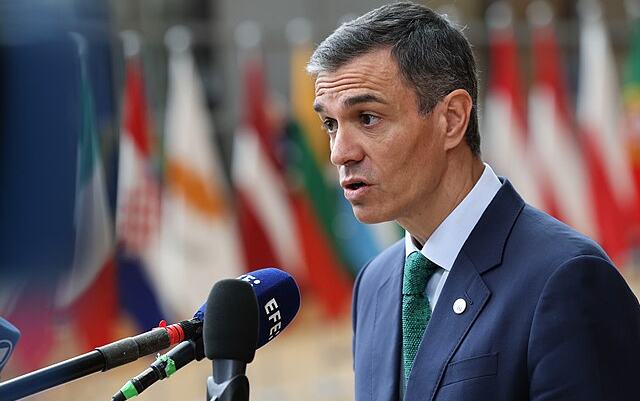
Spain’s Prime Minister Pedro Sánchez announced on Wednesday the launch of HODIO, a new tool designed to measure hate speech on digital platforms. While presented as a measure to address online hostility, critics warn the system risks giving the government unprecedented oversight over public expression and social media activity.
HODIO, short for Footprint of Hatred and Polarisation in Spanish, is intended to track the presence, amplification, and impact of hate speech. Sánchez framed the initiative as a way to make online hostility “visible” and comparable to measuring a carbon footprint, suggesting that tracking it will help curb societal divisions.
However, opponents say the plan raises serious questions about government overreach. The tool will provide detailed data on social media activity, including which content is being moderated, ignored, or monetized. Critics argue that this level of surveillance could easily be used to target political dissent or unpopular opinions under the guise of combating hate.
The announcement comes as Spain prepares additional regulations for social media, including restrictions on younger users and requirements for executives to monitor content. While framed as consumer protection, the measures have prompted skepticism over whether enforcement could be selectively applied to suppress free expression.
Transparency, Sánchez promises, will accompany the tool’s results, with public access showing “who is blocking this content, who is looking the other way, and who is profiting from it.” Yet critics warn that without strict safeguards, HODIO could give authorities a roadmap to silence voices the government disagrees with, turning a program meant to track hate speech into a potential instrument of political control.
As Spain moves forward, questions remain about where the line will be drawn between curbing harmful speech and restricting legitimate discourse in a democratic society.

Comments
No comments yet. Be the first to share your thoughts.