
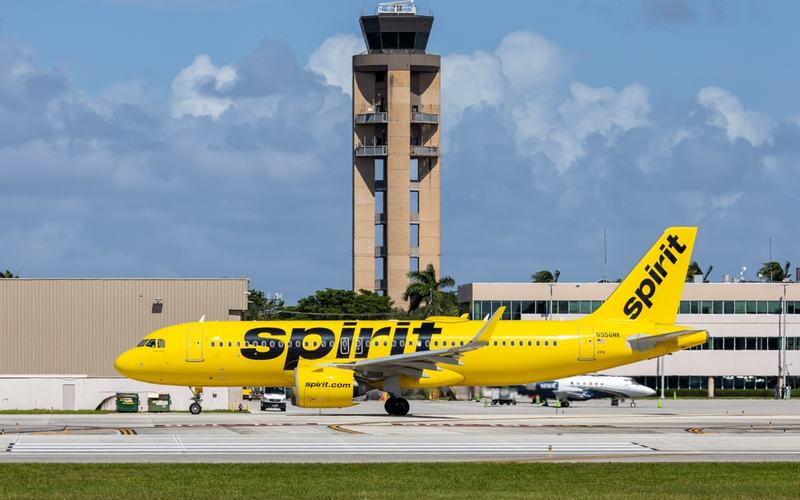
Spirit Airlines halted all flights and began an orderly wind-down of operations early Saturday, marking the end of the ultra-low-cost carrier after 34 years. The company announced the closure around 3 a.m. ET, stating that customer service was no longer available and all tickets were canceled.
"It is with great disappointment that on May 2, 2026, Spirit Airlines started an orderly wind-down of our operations, effective immediately," the airline said in an online statement. "To our Guests: all flights have been canceled, and customer service is no longer available. We are proud of the impact of our ultra-low-cost model on the industry over the last 34 years and had hoped to serve our Guests for many years to come."
The shutdown followed the collapse of talks for a $500 million government bailout from the Trump administration. The proposed deal would have provided financing in exchange for warrants equivalent to about 90% of Spirit's equity, but bondholders refused to support it, and internal administration disagreements prevented finalization. President Trump had indicated openness to aid but emphasized that any deal must prioritize American interests. "We're looking at Spirit. If we can help them, we will, but we have to come first," he said Friday. "If we could do it, we'd do it, but only if it's a good deal."
Spirit's demise stemmed from prolonged financial struggles exacerbated by soaring jet fuel prices. The carrier filed for Chapter 11 bankruptcy in November 2024, emerged in March 2025 after a quick restructuring, but entered a second bankruptcy amid heavy debt and competition. A blocked $3.8 billion merger with JetBlue in 2024 due to antitrust concerns further weakened its position. The tipping point came with jet fuel prices doubling to around $4.51 per gallon by late April, driven by disruptions from the ongoing Iran war that began in late February. This spike derailed assumptions in Spirit's restructuring plan, which budgeted for $2.24 per gallon in 2026.
At its peak, Spirit held about 5% of the U.S. domestic flight market, but its share had shrunk to 3.9% by February 2026 as it cut routes and flights. The airline operated around 12,000 scheduled flights in April, down from 25,000 two years prior, and flew roughly 1.7 million passengers domestically that February. The closure will impact thousands of employees, with estimates around 17,000 jobs affected.
Major airlines quickly responded to aid stranded passengers. American Airlines implemented fare caps on overlapping routes, United Airlines offered support for Spirit customers and staff, and Frontier Airlines promised low-fare accommodations. Spirit's exit opens airport slots and routes for competitors, potentially consolidating the low-cost segment without taxpayer intervention.
Travelers with bookings should contact other carriers for rebooking, as no refunds or services are available from Spirit. The shutdown represents the first U.S. airline liquidation in two decades and underscores vulnerabilities in the ultra-low-cost model amid volatile energy markets.

Comments
No comments yet. Be the first to share your thoughts.