
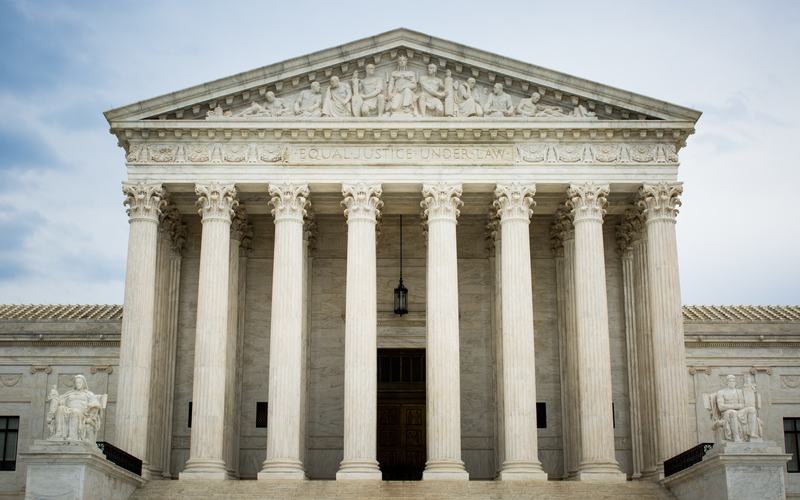
The Supreme Court of the United States on Monday declined to hear a case challenging whether artwork generated entirely by artificial intelligence can qualify for copyright protection under U.S. law, allowing prior rulings against the plaintiff to stand.
The case was brought by Missouri computer scientist Stephen Thaler, who sought copyright registration for a piece of visual art titled “A Recent Entrance to Paradise.” Thaler argued that the work was created autonomously by his AI system, known as DABUS, without human involvement. The image depicts train tracks entering a portal surrounded by green and purple plant-like imagery.
Thaler applied for federal copyright registration in 2018. In 2022, the United States Copyright Office rejected the application, concluding that creative works must have a human author to qualify for copyright protection. Lower federal courts upheld that determination, agreeing that existing law requires human authorship.
Thaler appealed to the high court, asking the justices to consider whether copyright statutes permit protection for works generated solely by artificial intelligence. By declining review, the Supreme Court left intact the lower court rulings affirming the Copyright Office’s interpretation.
The administration of President Donald Trump had urged the justices not to take up the appeal.
The Copyright Office has separately denied copyright claims involving images generated with assistance from the AI platform Midjourney. In those instances, artists argued they were entitled to protection because they directed or guided the AI system in producing the images. Thaler’s case differed in that he maintained the artwork at issue was produced independently by his system, without human creative input.
The court’s decision not to hear the case leaves unresolved broader policy questions surrounding artificial intelligence and intellectual property, while reinforcing the current legal standard that copyright protection applies only to works created by human authors.

Comments
No comments yet. Be the first to share your thoughts.