
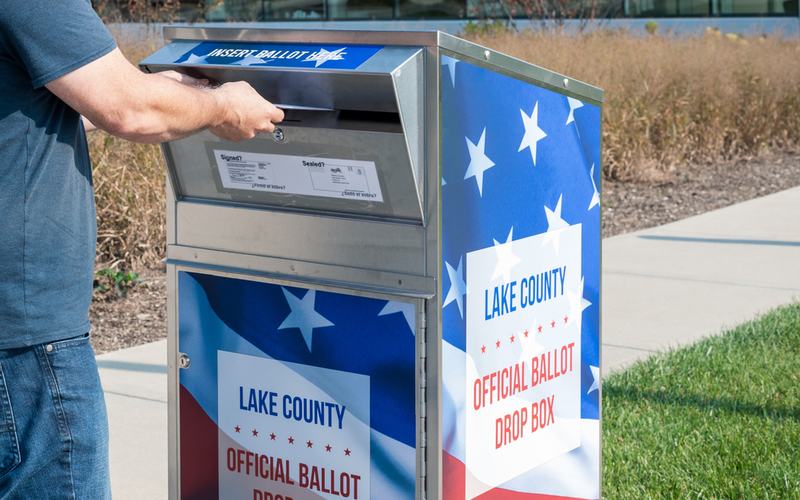
The Supreme Court is scheduled to hear oral arguments on Monday in Watson v. Republican National Committee, a case that could reshape mail-in voting rules across multiple states ahead of the November 3 midterm elections.
Mississippi Secretary of State Michael Watson is petitioning the court to uphold the state's law, which permits election officials to count mail ballots postmarked by Election Day if received within five business days. Challengers, including the Republican National Committee, the Mississippi Republican Party, and the Libertarian Party of Mississippi, argue the practice violates federal Election Day statutes enacted in 1845 and 1872, which establish a uniform national Election Day, the Tuesday after the first Monday in November, for casting and receiving ballots in federal elections.
A federal district court upheld Mississippi's law, but the 5th U.S. Circuit Court of Appeals reversed in a ruling by Judges James Ho, Kyle Duncan, and Andrew Oldham, stating that an "election" under federal law includes both voter submission and official receipt of ballots. The full appeals court denied rehearing en banc over a dissent from five judges, prompting the Supreme Court's grant of certiorari in November 2025.
Fourteen states currently offer grace periods for regular mail ballots, ranging from one day in Texas to 21 days in Washington, while 29 states and the District of Columbia extend such periods for certain voters, like military personnel and those overseas. A ruling requiring receipt by Election Day could upend these policies, potentially disqualifying hundreds of thousands of otherwise valid ballots and forcing states to adjust procedures months before absentee ballots are mailed for the midterms.
Proponents of the challenge, aligned with President Donald Trump's long-standing criticisms of mail voting, contend that grace periods undermine election integrity by delaying results and inviting suspicion of fraud, even though studies show fraud rates near zero. "Election Day is Election Day for a reason," Ohio state Sen. Theresa Gavarone said during debate on her state's recent ban on the practice. The Trump administration filed a brief supporting the challengers, arguing Congress intended ballots to close on Election Day.
Mississippi defends the law by distinguishing between casting a ballot when voters make their choice and its receipt by officials, citing a 2020 Supreme Court order in a Wisconsin case. Amicus briefs from military groups, representing nearly 4 million service members, and voting rights organizations warn of disenfranchisement for rural, elderly, and overseas voters reliant on mail. Local election officials argue that states balance canvassing speed and security based on local needs.
The case follows a January 2026 ruling in Bost v. Illinois State Board of Elections, where the court, 7-2, affirmed standing for candidates to challenge similar grace periods. Four states, Kansas, North Dakota, Ohio, and Utah, already eliminated grace periods last year. A decision is expected by late June or early July, leaving limited time for implementation if grace periods are curtailed.

Comments
No comments yet. Be the first to share your thoughts.