
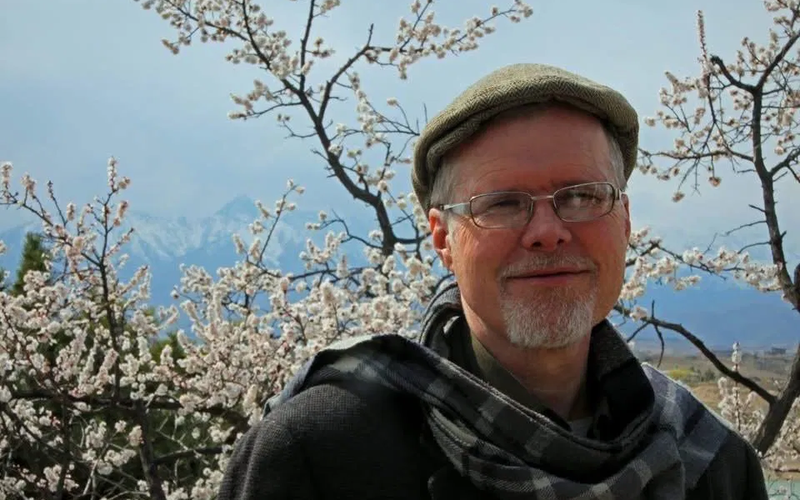
Afghanistan's Taliban government released American academic Dennis Coyle on Tuesday after holding him for more than a year without formal charges.
Coyle, 64, from Pueblo, Colorado, had been detained on January 26, 2025, when Taliban agents from the General Directorate of Intelligence took him from his Kabul apartment. The researcher had spent nearly two decades in Afghanistan studying linguistics and supporting local language communities. The U.S. State Department designated his detention as wrongful on June 2, 2025, noting he faced near-solitary conditions and inadequate medical care.
The Taliban's foreign ministry announced the release in a statement posted online, saying Afghanistan's Supreme Court had deemed Coyle's imprisonment sufficient and authorized his pardon to mark Eid al-Fitr, the holiday ending Ramadan. The decision followed a letter from his family requesting leniency, according to Taliban officials.
Coyle was handed over at Kabul airport to representatives including UAE special envoy Saif Al Ketbi and former U.S. ambassador Zalmay Khalilzad. He departed Afghanistan on a flight bound for the United Arab Emirates and is en route home, U.S. officials said. Speaking briefly to the BBC Afghan service after his release, Coyle said he was "feeling good."
U.S. Secretary of State Marco Rubio welcomed the development in a statement, noting that President Trump remains committed to ending unjust detentions abroad. Rubio highlighted that Coyle's freedom marks the release of more than 100 Americans in the past 15 months under Trump's second term. He thanked the UAE for its role in the negotiations and Qatar for ongoing advocacy, while calling on the Taliban to end its "hostage diplomacy." The State Department affirmed that Afghanistan remains a state sponsor of wrongful detention.
The release comes amid continued U.S. efforts to secure other detained Americans, including Mahmood Habibi, missing since 2022, and Paul Overby, who disappeared in 2014 while researching in Afghanistan. The Taliban has previously used foreign detainees as leverage in negotiations.
Coyle's family had advocated for his release through a dedicated website and public appeals, describing him as a dedicated scholar with deep ties to Afghan culture. Advocacy groups like the James Foley Foundation tracked his case, emphasizing the Taliban's pattern of arbitrary detentions.

Comments
No comments yet. Be the first to share your thoughts.