
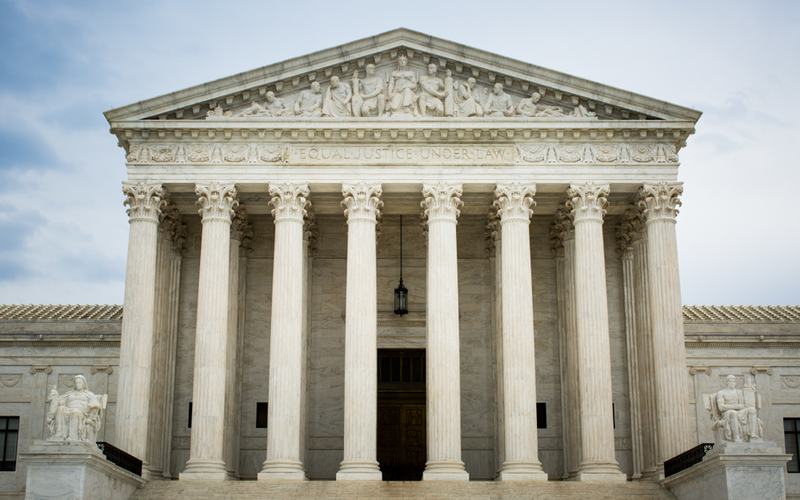
The Trump administration asked the Supreme Court on Thursday to intervene and allow the Department of Homeland Security to terminate Temporary Protected Status for Syrian nationals, affecting roughly 6,500 individuals living legally in the United States.
Solicitor General D. John Sauer filed the emergency application, urging the justices to stay a November 2025 order from U.S. District Judge Katherine Polk Failla in New York that indefinitely blocked DHS's termination decision. The 2nd U.S. Circuit Court of Appeals denied the government's request for a stay on February 17, prompting the Supreme Court appeal. The high court ordered challengers to respond by March 5.
DHS Secretary Kristi Noem announced the TPS termination in September 2025, setting an effective date of November 21. She determined that Syria no longer met the program's criteria following the December 2024 overthrow of Bashar al-Assad's regime. Noem cited efforts by the new interim government under President Ahmed al-Sharaa toward stability, the lifting of U.S. sanctions, and normalized relations with Damascus as reasons conditions had improved. Continuing TPS, she said, was contrary to the national interest and undermined peacebuilding efforts.
The TPS program, enacted by Congress in 1990, provides temporary deportation relief and work authorization to nationals of designated countries facing armed conflict, natural disasters, or other extraordinary conditions. Syria received a designation in 2012 under Obama-era DHS Secretary Janet Napolitano amid Assad's crackdown on protesters and ensuing civil war. Protections were extended multiple times, including during Trump's first term.
DHS estimated 6,132 Syrians held TPS as of September 8, 2025, with 833 pending applications. If terminated, beneficiaries would lose protection from removal and eligibility for work permits.
A group of seven Syrian nationals challenged Noem's decision, arguing it violated the Administrative Procedure Act due to inadequate agency consultation and political motivations tinged with animus. Judge Failla agreed the move likely breached federal law. The administration countered that courts lack authority to review TPS terminations and that the decision mirrored prior cases, such as those involving Venezuela, where the Supreme Court granted stays in 2025.
"This application marks the third time that the government has been compelled to seek a stay from this court after lower courts have baselessly blocked the Secretary of Homeland Security’s determinations," Sauer wrote, warning of protracted litigation otherwise. Challengers' lawyers called it a "preordained, political decision, motivated by animus."
The move fits President Trump's broader immigration enforcement agenda, including mass deportations. DHS has sought to end TPS for 12 countries, succeeding in cases for Afghanistan, Cameroon, Nepal, Honduras, and Nicaragua after Supreme Court intervention. Terminations for Ethiopia, South Sudan, Haiti, Syria, and Myanmar remain blocked by courts.

Comments
No comments yet. Be the first to share your thoughts.