
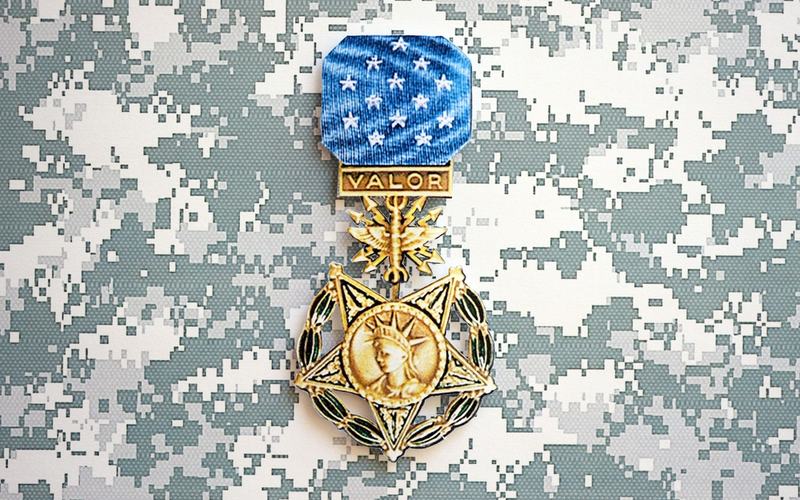
President Donald Trump presented the Congressional Medal of Honor, the nation's highest military award for valor, to two heroes during his State of the Union address Tuesday night in the House chamber of the U.S. Capitol.
The back-to-back awards marked a rare moment, believed to be the first time such presentations have occurred during a State of the Union speech, highlighting acts of bravery spanning seven decades from the Korean War to a recent special operations raid in Venezuela.
First, Trump recognized Chief Warrant Officer 5 Eric Slover of the U.S. Army, a Chinook helicopter pilot with the 160th Special Operations Aviation Regiment. On January 3, Slover was flight lead during the raid that captured Venezuelan leader Nicolás Maduro in Caracas. As his helicopter approached the target under heavy machine-gun fire, he took four bullets to his leg and hip but maneuvered the aircraft to expose enemy positions, enabling door gunners to suppress the threat and avert a crash that could have endangered his crew and Delta Force operators aboard. Blood poured down the cabin, yet Slover landed safely before handing controls to his co-pilot, warning he was about to pass out. Still recovering and using a walker, Slover stood with his wife as Lt. Gen. Jonathan Braga, commander of U.S. Special Operations Command, placed the medal around his neck.
"Eric was hit very badly in the leg and hip, one bullet after another. He absorbed four agonizing shots, shredding his leg into numerous pieces," Trump recounted. "The success of the entire mission and the lives of his fellow warriors hinge on Eric’s ability."
Trump then turned to retired Navy Capt. E. Royce Williams, a 100-year-old veteran whose heroism occurred on November 18, 1952, during the Korean War. Flying an F9F-5 Panther from the USS Oriskany, Williams engaged seven Soviet MiG-15 jets—flown by Soviet pilots—in a 35-minute dogfight over the Sea of Japan amid blizzard conditions. Outnumbered after his wingmen could not join, he downed four MiGs while his plane absorbed more than 250 bullet holes but nursed it back to the carrier, avoiding ejection into frigid waters. The clash was classified for decades to prevent escalation with the Soviet Union, a secret Williams kept even from his wife until records declassified in the 1990s.
Williams, who previously earned the Silver Star and Navy Cross, upgraded in recent years, received congressional waiver of the Medal of Honor's five-year time limit. First Lady Melania Trump presented the blue-ribboned star, drawing one of the evening's longest standing ovations from lawmakers of both parties. "At 100 years old, this brave Navy captain is finally getting the recognition he deserves. He was a legend long before this evening," Trump said.
The presentations underscored themes of American courage across eras, with Trump noting 10 other Maduro raid participants would receive awards at a future White House ceremony. He also bestowed other honors, including the Presidential Medal of Freedom on U.S. Olympic hockey goalie Connor Hellebuyck, Purple Hearts to service members wounded in the line of duty, and the Legion of Merit to a Coast Guard swimmer.
The bipartisan applause reflected broad admiration for the recipients' sacrifices, bridging partisan divides in the chamber.

Comments
No comments yet. Be the first to share your thoughts.