
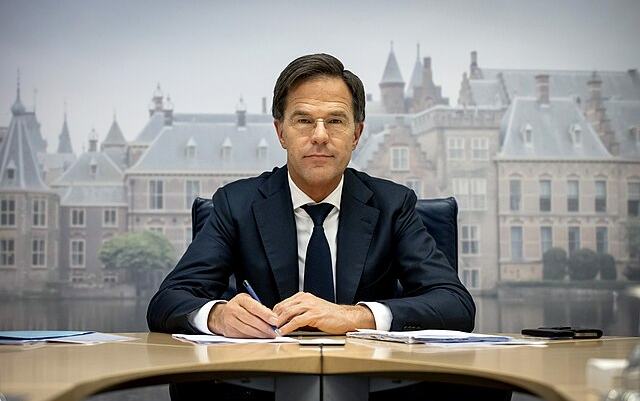
President Donald Trump met with NATO Secretary General Mark Rutte at the White House on Wednesday amid heightened tensions within the alliance following the recent U.S.-Iran war.
The private meeting came hours after a fragile two-week ceasefire took effect between the United States, Israel, and Iran, including plans to reopen the Strait of Hormuz, a critical oil shipping route that Iran had closed during the conflict. Trump has expressed deep frustration with NATO allies for not providing support during Operation Epic Fury, the U.S.-led military campaign against Iran that involved airstrikes alongside Israel.
White House press secretary Karoline Leavitt stated that Trump views the alliance as having been "tested, and they failed" during the war, with allies refusing requests for airspace access, military bases, or naval assistance to secure the strait. "NATO countries turned their backs on the American people, who fund their nations' defense," Leavitt said ahead of the talks. Following the meeting, Trump posted on Truth Social: "NATO WASN’T THERE WHEN WE NEEDED THEM, AND THEY WON’T BE THERE IF WE NEED THEM AGAIN."
Rutte, who assumed the role of NATO chief after serving as Dutch prime minister, arrived in Washington for a multi-day visit that includes meetings with Secretary of State Marco Rubio and Secretary of War Pete Hegseth. Speaking to CNN's Jake Tapper after the discussion, Rutte described it as a "very frank, very open discussion, but also a discussion between two good friends." He acknowledged Trump's disappointment, noting that "some" NATO members failed commitments but the "large majority of Europeans" provided help.
The Iran conflict exacerbated longstanding U.S. concerns about burden-sharing within NATO. Trump has repeatedly criticized European allies for not meeting the 2% GDP defense spending target and for relying on American security guarantees without reciprocal support. During the war, oil prices surged after Iran's Hormuz blockade, hitting Europe hard as many nations depend on Gulf imports. Trump argued that those countries should lead efforts to clear mines and secure the strait, rather than the U.S. bearing the full load.
Trump has mused publicly about U.S. withdrawal from NATO, though a 2023 law requires congressional approval for such a move. Additional friction points include reduced U.S. aid to Ukraine and Trump's interest in acquiring Greenland from Denmark, another NATO member. Despite the strains, Rutte has cultivated a personal rapport with Trump, praising his leadership in past interactions.
No specific outcomes emerged from Wednesday's closed-door session, but Rutte emphasized the need for increased defense industry cooperation and discussions on Ukraine. The NATO chief is scheduled to speak at the Ronald Reagan Presidential Foundation on Thursday and attend the Bilderberg Meeting later in the week. Analysts described the encounter as a high-stakes test for Rutte, who must balance alliance unity with Trump's demands for fairness.

Comments
No comments yet. Be the first to share your thoughts.