
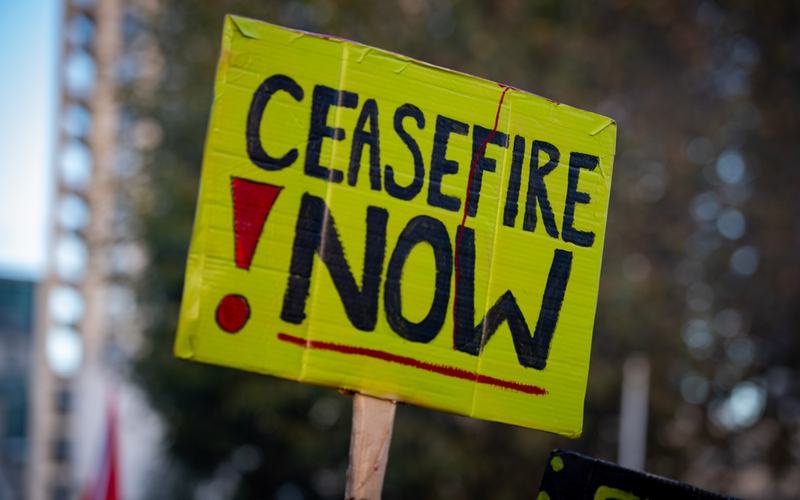
President Donald Trump disclosed that Iran is ready to negotiate a ceasefire to end the war between the United States, Israel, and Iran, but he turned down the proposal because the terms fell short of his requirements.
Trump made the comments in an interview with NBC News on Saturday, saying, "Iran wants to make a deal, and I don’t want to make it because the terms aren’t good enough yet." He emphasized that any agreement must include "very solid" conditions, such as Iran completely abandoning its nuclear ambitions, though he declined to detail other specifics.
The revelation came as the conflict, now in its third week, showed no signs of abating. The war erupted around early March 2026 with joint U.S. and Israeli airstrikes on Iranian targets, prompting Tehran to retaliate with attacks on Israel and U.S. positions in the region. Iran also closed the Strait of Hormuz, through which one-fifth of global oil passes, causing oil prices to surge and disrupting energy supplies worldwide.
On Friday night, U.S. forces struck Iran's Kharg Island, the country's primary oil export terminal, as part of Operation Epic Fury aimed at dismantling Tehran's missile and drone capabilities. Trump described the strikes as having "totally demolished" the island's military targets while sparing energy infrastructure to avoid long-term rebuilding needs. At least 13 U.S. service members have died in the conflict, including six in a plane crash in Iraq, while over 2,000 people, mostly Iranians, have been killed.
Mediation efforts by Middle Eastern allies, including Oman and Egypt, sought to initiate ceasefire talks between Washington and Tehran but were rebuffed by the Trump administration. A senior White House official stated, "He’s not interested in that right now, and we’re going to continue with the mission unabated." Iran, for its part, has ruled out any truce until U.S. and Israeli strikes cease permanently and demanded compensation, according to senior Iranian sources.
Iran's new Supreme Leader, Mojtaba Khamenei, has vowed to maintain the Strait of Hormuz closure and threatened attacks on U.S. allies in the Gulf. Trump noted coordination with multiple nations, including potential contributors like China, France, Japan, South Korea, and the UK, to secure the waterway with warships.
The standoff follows failed nuclear negotiations that began in April 2025, mediated by Oman and others, which broke down after U.S. and Israeli strikes in late February 2026 that killed former Supreme Leader Ali Khamenei. A prior ceasefire ended a "Twelve-Day War" in June 2025, but tensions reignited amid disputes over Iran's nuclear program and regional proxies.
As of Sunday morning, both sides remained entrenched, with no immediate diplomatic breakthrough in sight.

Comments
No comments yet. Be the first to share your thoughts.