
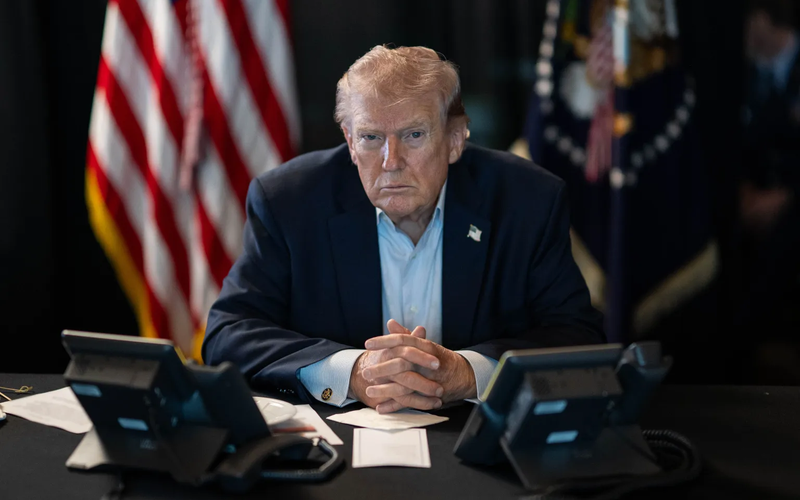
President Donald Trump said Monday that the United States is engaged in discussions with Iranian representatives and claimed Tehran is actively seeking a deal to end the ongoing war. Speaking to reporters, Trump said recent talks involved U.S. envoy Steve Witkoff and Jared Kushner, describing the discussions as productive and indicating that both sides have reached an agreement on key points.
Trump did not identify the Iranian figure involved but described him as a highly respected leader, while noting that the U.S. has not held direct talks with Supreme Leader Ayatollah Mojtaba Khamenei. He added that additional discussions were expected, potentially by phone, as negotiations continue.
The president said any agreement would include the removal of Iran’s enriched uranium, a central issue in longstanding disputes over Tehran’s nuclear program. He reiterated that the U.S. objective is to prevent Iran from developing nuclear weapons and to secure broader stability in the Middle East.
Iranian officials, however, denied that such talks are taking place. State media reports said Tehran rejected claims of negotiations and characterized Trump’s statements as part of a broader strategy tied to military and economic pressure.
The diplomatic back-and-forth comes as the conflict between the United States, Israel, and Iran continues to escalate, with more than 2,000 people reported killed across multiple देशों. Strikes have targeted critical infrastructure, including energy facilities, while threats have extended to power grids and desalination plants that supply water to large populations across the region.
Trump recently warned that the United States could target Iran’s power infrastructure if Tehran does not loosen control over the Strait of Hormuz, a key global oil transit route. He later extended a previously set deadline by five days, citing ongoing discussions as a factor in the decision.
Regional powers, including Turkey and Egypt, have stepped up mediation efforts. Officials from both countries confirmed increased diplomatic outreach to parties involved in the conflict, signaling a coordinated push to reduce tensions.
Despite the rhetoric, U.S. military leadership has maintained that no ground invasion is currently planned, though additional naval and Marine deployments have been made to the region. Iranian officials have warned of retaliation if further escalation occurs, including potential attacks on infrastructure linked to U.S. interests.
The war has had significant global consequences, driving volatility in oil prices and raising concerns about supply disruptions. International officials have warned that continued escalation could deepen economic instability and further endanger civilian populations across the Middle East.

Comments
No comments yet. Be the first to share your thoughts.