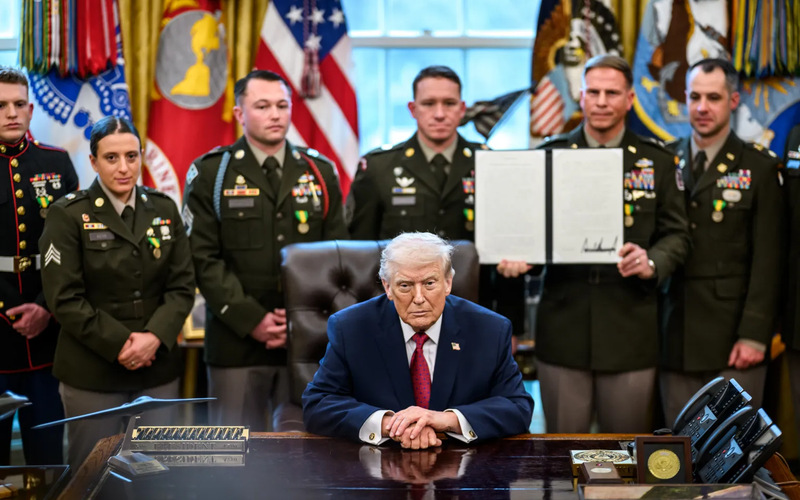
President Donald Trump told service members and their families Friday at Fort Bragg that the United States is spending $1 trillion on its military in the current fiscal year and that figure will be increased in the next budget cycle.
Speaking at an event attended by top military leaders and local Republican officials, Trump framed the spending as part of his broader “peace through strength” strategy, saying robust investment in the armed forces will deter adversaries and bolster national security. “Because of our strength … we probably won’t have to be tested,” he said in remarks that emphasized high levels of defense outlays and growing capabilities.
The president highlighted recent U.S. military operations abroad, including a raid that ousted Venezuelan President Nicolás Maduro, which he said demonstrated American military power and precision. Trump praised special forces and called the United States “feared” by potential adversaries for the reach and effectiveness of its operations.
Trump also celebrated restoring the Fort Bragg name and criticized Democrats for supporting efforts to rename military installations, warning that a change in political control could jeopardize those decisions.
The remarks came amid a blend of military praise and political messaging, drawing criticism from some observers who noted the mixing of partisan themes with addresses to active duty troops—a practice that has sparked debate over traditional norms regarding political activity on military bases.
Trump touted economic conditions and said retirement accounts have benefited from administration policies. He also said enlistment has risen and that merit, rather than ideology, is the sole basis for advancement within the military under his leadership.
As part of the expanded defense spending, Trump said the Pentagon will invest in new equipment, including tanks and helicopters, and build next‑generation naval platforms while improving on‑base housing.
First Lady Melania Trump joined the president at Fort Bragg, where Trump reaffirmed his commitment to maintain U.S. military superiority and linked robust defense funding to his broader “America First” policy agenda.

Comments
No comments yet. Be the first to share your thoughts.