
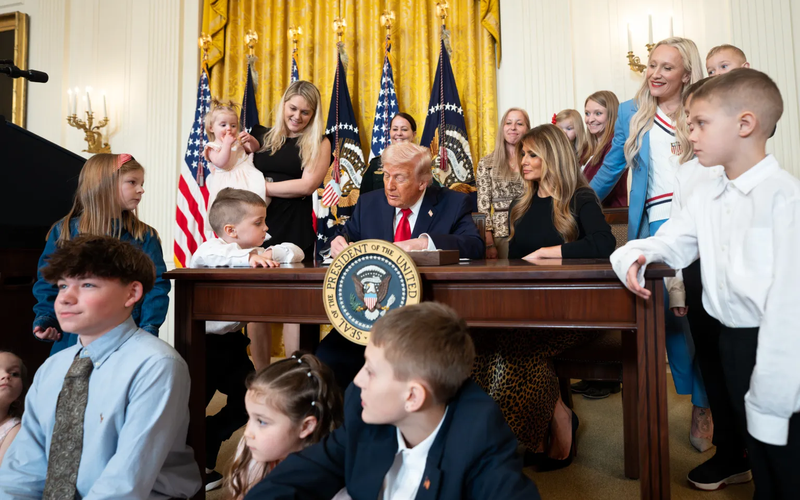
President Donald J. Trump signed two executive orders on Friday aimed at addressing the nation's housing affordability crisis by cutting red tape and improving access to home loans.
The first order, titled one removing regulatory barriers to affordable home construction, directs federal agencies including the Environmental Protection Agency, Department of Housing and Urban Development, and others to revise permitting processes for stormwater, wetlands, and water-related projects. It also seeks to streamline energy and water requirements for housing, maximize exclusions under the National Environmental Policy Act for housing projects, and simplify historic preservation reviews. The administration argues these changes will counter regulations that add over $90,000 to the price of new single-family homes and delay projects for years.
Trump stated that the measures empower homebuilders and provide immediate relief to families priced out of the market. The order encourages states and localities to adopt faster permitting and fewer mandates, while aligning tax incentives like Opportunity Zones with single-family development.
The second executive order promotes access to mortgage credit by instructing the Consumer Financial Protection Bureau and federal banking regulators to tailor rules for smaller banks, modernize reporting under the Home Mortgage Disclosure Act, and reform appraisal requirements. It supports community bank lending for construction and entry-level housing, expands liquidity programs, and promotes digital tools like electronic signatures to reduce costs and burdens.
These actions build on Trump's January 20 Day One executive order, 'Stopping Wall Street from Competing with Main Street Homebuyers,' which restricts large institutional investors from purchasing single-family homes through federal programs and promotes sales to individual owner-occupants. That order also calls for antitrust reviews of investor activities and disclosures in federal housing assistance.
The White House highlighted early progress from these efforts. The Department of Housing and Urban Development reported that income needed to buy a home has fallen four percent, mortgage affordability is at a four-year high, and existing home sales rose more than five percent in December 2025. National median rents are at a four-year low, and HUD supported over one million homebuyers, including more than 430,000 veteran loans.
Administration officials attribute improvements to deregulation, including directives for Fannie Mae and Freddie Mac to buy $200 billion in mortgage-backed securities, and broader 2025 efforts saving families an estimated $2,500 annually. They blame prior policies for inflating costs through green mandates adding $30,000 per home and Dodd-Frank rules driving community banks from mortgage markets.
The moves come as housing costs remain a concern ahead of the 2026 midterms, with critics arguing supply shortages require more than investor restrictions. Supporters praise the focus on individual homeownership and reducing federal overreach.
Trump's actions continue a pattern of using executive authority to tackle what the administration calls Biden-era mismanagement, including high inflation and interest rates that sidelined first-time buyers.

Comments
No comments yet. Be the first to share your thoughts.