
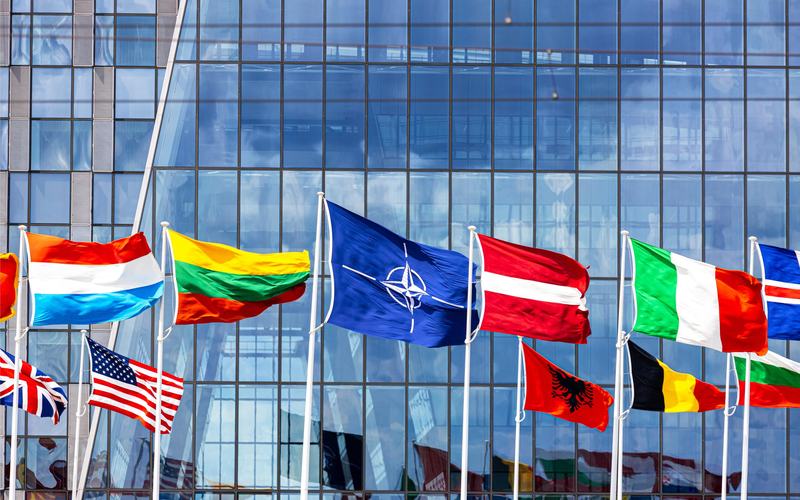
President Donald Trump stated Tuesday that the United States no longer needs or desires assistance from NATO countries in the conflict with Iran, emphasizing American military success without allied support.
Speaking to reporters in the Oval Office during a meeting with Ireland's Taoiseach Micheál Martin, Trump described NATO's refusal to help secure the Strait of Hormuz as a "very foolish mistake." He called the situation "a great test, because we don't need them, but they should have been there." In a Truth Social post earlier that day, Trump wrote, "we no longer ‘need,’ or desire, the NATO Countries’ assistance — WE NEVER DID! Likewise, Japan, Australia, or South Korea. In fact... WE DO NOT NEED THE HELP OF ANYONE!"
The remarks came amid the U.S.-Israeli war against Iran, which began on February 28 after failed nuclear talks. U.S. strikes have reportedly decimated Iran's air force, navy, radar systems, anti-aircraft defenses, and leadership, according to Trump. Iran has closed the Strait of Hormuz to tanker traffic by attacking vessels and UAE infrastructure, disrupting about 20% of global oil supply and driving up prices.
Trump initially urged NATO allies and others, including China, to send warships to reopen the strait. However, European nations rebuffed the calls. Germany's Defense Minister Boris Pistorius said, "This is not our war; we did not start it." France's President Emmanuel Macron stated France would not participate in operations to liberate the strait "in the current context." The UK is working on a plan but will not join the wider war, and EU leaders showed no appetite for involvement. Trump labeled NATO a "one-way street," noting the U.S. spends hundreds of billions protecting allies who offer nothing in return.
Trump praised support from Middle Eastern nations like Qatar, the UAE, Saudi Arabia, Bahrain, and Israel. He hinted at future repercussions for NATO, saying the U.S. has spent trillions on the alliance and must remember allies' inaction, though he has "nothing currently in mind" regarding withdrawal. Ireland's Martin stressed the importance of the transatlantic relationship and a peaceful resolution to prevent Iran from acquiring nuclear weapons.
The conflict has complicated U.S. plans, including a potential delay in Trump's trip to meet China's Xi Jinping. White House officials maintain broad international agreement on curbing Iran's nuclear ambitions.

Comments
No comments yet. Be the first to share your thoughts.