
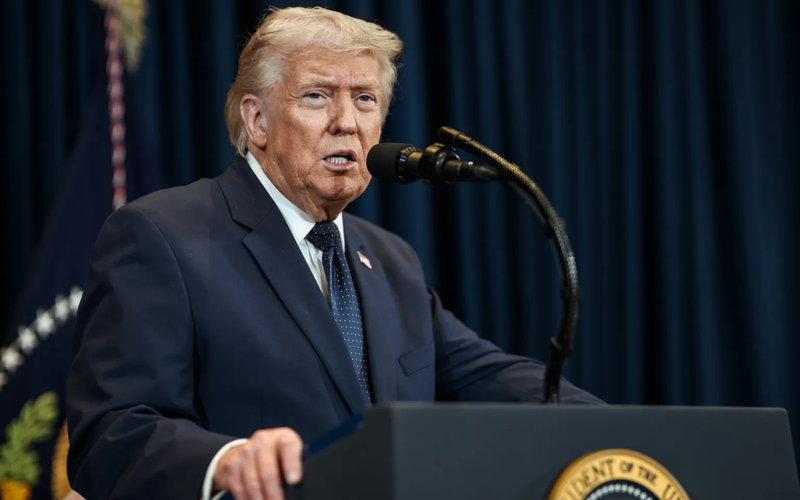
President Donald Trump vowed to escalate strikes on Iranian infrastructure after U.S. forces destroyed a key bridge west of Tehran, intensifying a conflict now in its fifth week.
The B1 suspension bridge in Karaj, a 136-meter-high structure costing $400 million and linking Tehran to the Caspian Sea region, was hit twice Thursday, splitting it in half and causing it to collapse onto the roadway below. Iranian officials reported eight people killed and 95 wounded, attributing the casualties to picnickers from a nearby village celebrating the end of Nowruz. A U.S. military official described the target as a planned supply route for Iran's missile and drone forces.
Trump celebrated the strike on Truth Social, posting video footage of the explosion and plume of smoke. "The biggest bridge in Iran comes tumbling down, never to be used again," he wrote, adding there would be "much more to follow." Later Thursday, he escalated his rhetoric: "The U.S. military hasn't even started destroying what's left in Iran. Bridges next, then Electric Power Plants." Trump urged Iran's leaders to "MAKE A DEAL BEFORE IT IS TOO LATE, AND THERE IS NOTHING LEFT OF WHAT STILL COULD BECOME A GREAT COUNTRY!"
The attack came amid Iran's effective blockade of the Strait of Hormuz, which carries about one-fifth of global oil trade, in retaliation for U.S. and Israeli strikes that began February 28. U.S. crude oil prices surged 11% Thursday, fueling concerns over energy shortages in Asia and potential crises in Europe and Africa.
Iran condemned the strike as a sign of U.S. "moral collapse." Foreign Minister Abbas Araghchi said attacks on civilian sites like the unfinished bridge would not force surrender, while officials vowed to rebuild it "stronger." Iranian military spokesperson Ebrahim Zolfaqari promised "more crushing, broader and more destructive" responses.
The conflict stems from failed 2025-2026 negotiations over Iran's nuclear program, which collapsed after a June 2025 Israeli strike and U.S. ultimatums. On February 28, U.S. and Israeli forces launched major assaults, assassinating top Iranian leaders, including Supreme Leader Ali Khamenei. Trump addressed the nation Wednesday, claiming military successes and threatening to send Iran back to the "Stone Ages" without a deal.
Internationally, Britain led a meeting of 40 nations to restore navigation in the strait, while the U.N. Security Council prepares a vote Saturday on protecting shipping. More than 100 U.S. legal experts raised concerns over potential war crimes in targeting civilian infrastructure. Gulf states have intercepted Iranian drones but avoided escalation.
As Friday dawned, no immediate end appeared in sight, with Trump pressing for a peace agreement to reopen the strait.

Comments
No comments yet. Be the first to share your thoughts.