
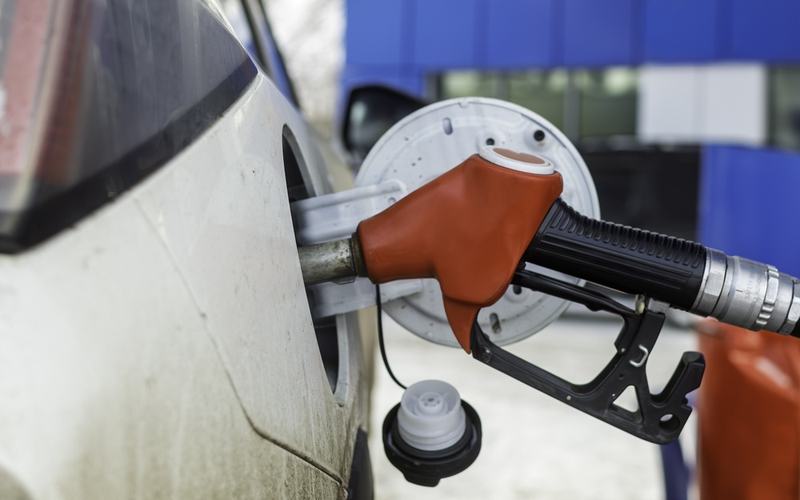
President Donald Trump warned Americans on Thursday to prepare for continued high gas prices due to the ongoing war with Iran.
Speaking at a health-care affordability event in the Oval Office, Trump said the nation should anticipate paying more at the pump 'for a little while' as the conflict persists. He emphasized that the U.S. maintains total control over the Strait of Hormuz and would keep it closed until Iran agrees to a deal, rejecting Tehran's recent proposal to reopen the vital oil shipping route.
The national average price for regular gasoline stood at $4.03 per gallon as of Wednesday, according to AAA, down six cents from the prior week but up more than 30% since the war began in late February. Brent crude oil futures closed at $105.07 per barrel on Thursday, while West Texas Intermediate settled at $95.85.
The conflict erupted on February 28 when U.S. and Israeli forces struck Iranian military targets. Iran retaliated, prompting the U.S. to impose a naval blockade on the Strait of Hormuz, through which about 20% of global oil passes. Trump announced the blockade on April 12, stating the U.S. Navy would stop ships from entering or leaving the strait. The administration initially expected the operation, dubbed Operation Epic Fury, to last four to six weeks, but has extended the timeline without a resolution.
Trump reiterated on Thursday that outcomes have exceeded expectations, noting the stock market reached an all-time high and oil prices remained lower than the $200 per barrel he anticipated. 'This country is much lower [on gas prices] because we have all the oil we can use,' he said.
Earlier this month, during a Fox News interview on April 12, Trump addressed midterm election concerns, telling host Maria Bartiromo that oil and gas prices could be' lower by November, 'or the same, or maybe a little bit higher, but it should be around the same.' He added, 'I think this won’t be that much longer.'
Energy Secretary Chris Wright stated over the weekend that prices might not drop below $3 per gallon until 2027, prompting Trump to call the forecast 'totally wrong.' The administration has released 10 million barrels from the Strategic Petroleum Reserve and urged oil producers to increase output.
A CNBC survey from April 15-19 found nearly 80% of 1,000 respondents altered spending habits due to pump prices, with most expecting increases to persist at least six months. The higher costs have added over $24 billion to U.S. consumers' fuel expenses since the war started.
Democrats have criticized the conflict as a 'war of choice' driving inflation, while Republicans defend it as essential to prevent Iran from acquiring nuclear weapons. Trump maintains the U.S. destroyed most of Iran's military capabilities in the first four weeks and now seeks a diplomatic resolution.

Comments
No comments yet. Be the first to share your thoughts.