
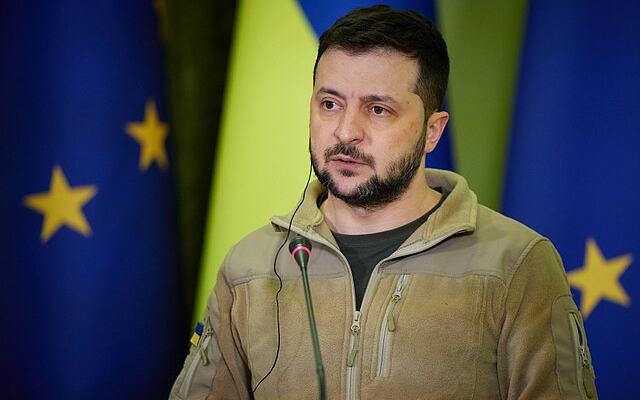
UK Defence Secretary John Healey confirmed on Monday that Ukrainian President Volodymyr Zelenskyy will visit London tomorrow.
Healey announced during a speech in the House of Commons, stating, "We will welcome President Zelensky to this country tomorrow." The visit comes as Britain reaffirms its commitment to Ukraine more than four years into Russia's full-scale invasion.
Prime Minister Keir Starmer indicated earlier in the day that he would meet Zelenskyy soon, emphasizing the need to maintain focus on Ukraine. "I will be meeting President Zelenskyy soon, because we must continue to focus on supporting Ukraine," Starmer said. "We cannot allow the war in the Gulf to turn into a windfall for Putin."
Healey underscored Britain's steadfast support amid competing global crises, including the ongoing conflict in the Middle East. "We face two conflicts on two continents, supported by an axis of aggression with similar tactics and similar technologies," he told MPs. "And I say this to the Ukrainian people on behalf of the UK: we will not forget the war in Europe, and our total determination to stand with Ukraine remains steadfast."
Over the past month, the UK has delivered 3,500 drones, 18,000 artillery rounds, and 3 million rounds of small arms ammunition to Ukraine, Healey noted. The defence secretary also affirmed Britain's resolve to meet NATO obligations and address threats in the High North.
No detailed agenda for Zelenskyy's trip has been released, but it precedes a European Council summit in Brussels on March 19-20, to which the Ukrainian leader has been invited. Zelenskyy is also scheduled to visit Spain on March 18 for talks with Prime Minister Pedro Sánchez.
The UK has been one of Ukraine's strongest allies since Russia launched its invasion in February 2022. London has provided billions in military aid, including advanced weaponry and training for Ukrainian forces. Recent high-level contacts include Zelenskyy's meetings with Healey and phone calls with Starmer earlier this year.
Starmer's remarks highlight concerns that the escalating Middle East tensions, now in their third week, could divert resources from Europe's security. The Gulf conflict involves disruptions to oil supplies through the Strait of Hormuz and British efforts to intercept attacks.
Zelenskyy's visit underscores the transatlantic alliance's determination to counter Russian aggression, even as attention shifts to other hotspots. Britain continues to lead efforts within coalitions supporting Kyiv, including recent pledges for post-war security arrangements.

Comments
No comments yet. Be the first to share your thoughts.