
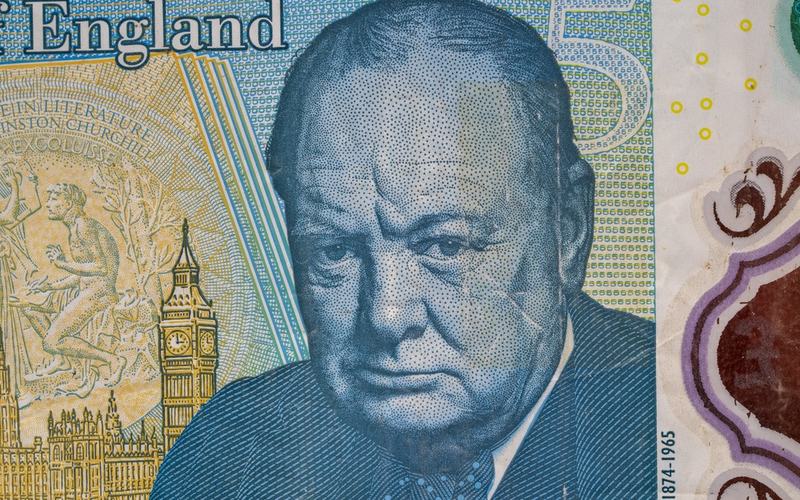
The Bank of England announced plans to replace prominent historical figures on British banknotes with images of native wildlife in what officials describe as the first major redesign of the country’s currency in roughly 50 years.
Under the proposal, figures currently featured on pound notes, including Winston Churchill on the £5 note, Jane Austen on the £10 note, J.M.W. Turner on the £20 note, and Alan Turing on the £50 note, would be removed and replaced with animals found in the United Kingdom.
Candidates under consideration include hedgehogs, badgers, puffins, red squirrels, robins, stags, and golden eagles. The redesign follows a public consultation held last summer in which nature emerged as the most popular theme among respondents. According to the Bank of England, roughly 60 percent of the 44,000 participants selected nature as one of their preferred themes, placing it ahead of architecture, historical figures, arts and culture, innovation, and notable milestones.
Officials say the shift is partly driven by practical considerations. Victoria Cleland, the Bank’s chief cashier, said wildlife imagery may help improve counterfeit detection while also offering an opportunity to highlight Britain’s natural environment.
“The key driver for introducing a new banknote series is always to increase counterfeit resilience,” Cleland said, adding that the redesign also allows the bank to “celebrate different aspects of the UK.”
A second public consultation scheduled for this summer will allow members of the public to vote on which animals should appear on the new notes. The final decision, however, will ultimately be made by the governor of the Bank of England.
Historical figures have appeared on British banknotes for more than five decades. The tradition began in 1970 when William Shakespeare became the first non-monarch to appear on a Bank of England note, printed on the £20 bill. Since then, a wide range of notable figures, including inventor James Watt and economist Adam Smith, have been featured on the nation’s currency.
The selection of historical figures has sometimes sparked controversy. In 2019, when mathematician Alan Turing was chosen for the £50 note, activists called for greater representation of ethnic minority figures on British currency.
Critics say removing figures like Churchill and Austen marks a significant break from the tradition of honoring individuals who helped shape the country’s history.
The redesign also comes as the use of cash continues to decline in the United Kingdom amid the growing dominance of electronic payments. Still, the Bank of England noted that about 15 percent of the population relies on cash as their preferred payment method and said it remains committed to maintaining physical currency.

Comments
No comments yet. Be the first to share your thoughts.