
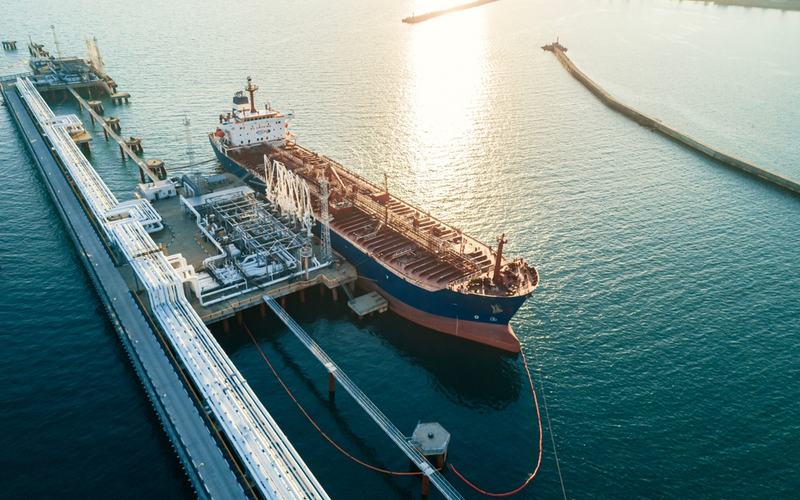
At least 40% of Russia's oil export capacity ground to a halt on Wednesday following a series of Ukrainian drone attacks on key infrastructure, according to calculations by Reuters based on market data. The disruptions, totaling around 2 million barrels per day, mark the most severe oil supply interruption in modern Russian history for the world's second-largest oil exporter.
Ukraine intensified its drone campaign against Russian energy facilities this month, striking all three major western oil export ports. The Black Sea port of Novorossiysk, with a capacity of up to 700,000 barrels per day, has been loading below schedule since a heavy drone attack earlier in March. Loadings at the Baltic Sea terminals of Primorsk and Ust-Luga were suspended after drone strikes this week that caused fires and damage. A major attack on Ust-Luga on Wednesday triggered a large fire visible from Finland, with smoke stretching dozens of kilometers.
Additional factors contributed to the shutdowns. Damage to the Druzhba pipeline, which carries oil through Ukraine to Hungary and Slovakia, halted those exports since late January; Ukraine attributes the damage to Russian strikes. Seizures of tankers linked to Russia in Europe have also disrupted about 300,000 barrels per day of Arctic oil exports from Murmansk.
Russia continues to export oil via alternative routes. Pipelines to China, including Skovorodino-Mohe, Atasu-Alashankou, and ESPO Blend from Kozmino, handle 1.9 million barrels per day. Shipments from Sakhalin total 250,000 barrels per day, and supplies to Belarus refineries reach 300,000 barrels per day. At least 50 tankers are queued offshore in the Gulf of Finland awaiting berths at Primorsk or Ust-Luga.
The strikes align with Kyiv's strategy to target Moscow's oil and gas revenues, which account for about a quarter of Russia's state budget and fund its $2.6 trillion economy and war effort. Global oil prices have surpassed $100 per barrel amid related tensions, including the Iran war. Russia has labeled the Ukrainian attacks as terrorism and bolstered security measures across its territory spanning 11 time zones.

Comments
No comments yet. Be the first to share your thoughts.