
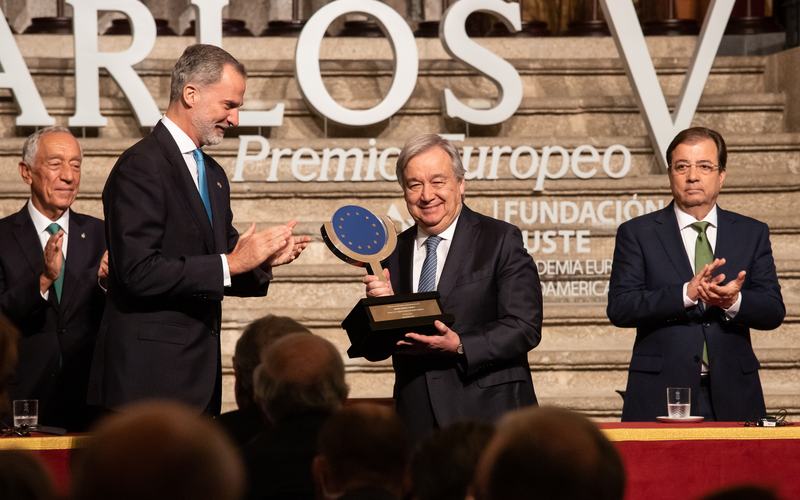
United Nations Secretary-General Antonio Guterres on Saturday criticized the recent U.S.-Israeli airstrikes on Iran, warning during an emergency Security Council meeting that the region risks sliding into a broader conflict if hostilities continue. He called for an immediate return to negotiations to “pull the region, and our world, back from the brink.”
Guterres cautioned that further escalation could have grave consequences for civilians and regional stability. At the same time, he also condemned Iran’s retaliatory missile and drone attacks, stating they violated the sovereignty and territorial integrity of Bahrain, Iraq, Jordan, Kuwait, Qatar, Saudi Arabia, and the United Arab Emirates.
Israel’s ambassador to the United Nations, Danny Danon, rejected criticism of the operation, calling it “hypocrisy” to denounce the strikes while ignoring Tehran’s role in backing militant proxies and advancing nuclear and missile programs. He said Israel and the United States acted to prevent what he described as an immediate and irreversible threat.
The strikes reportedly killed Iran’s supreme leader, Ali Khamenei, a development that has intensified concerns about prolonged confrontation. President Donald Trump wrote on social media that Khamenei’s death represents “the single greatest chance for the Iranian people to take back their Country.” Iranian Foreign Minister Abbas Araghchi, in a letter to the secretary-general, accused Washington and Jerusalem of violating Iran’s sovereignty and the U.N. Charter, asserting that Tehran was exercising its right to self-defense.
Five Security Council members, Bahrain, France, Russia, China, and Colombia, requested the emergency session. In a joint statement, the leaders of Britain, France, and Germany called for renewed diplomacy over Iran’s nuclear program. The three European governments condemned Iranian strikes across the region and urged Tehran to pursue a negotiated solution, emphasizing that the Iranian people should ultimately determine their country’s future.
The meeting took place on the final day of the United Kingdom’s rotating presidency of the council, with the United States set to assume the role the following day as diplomatic tensions continue to mount.


Comments
No comments yet. Be the first to share your thoughts.