
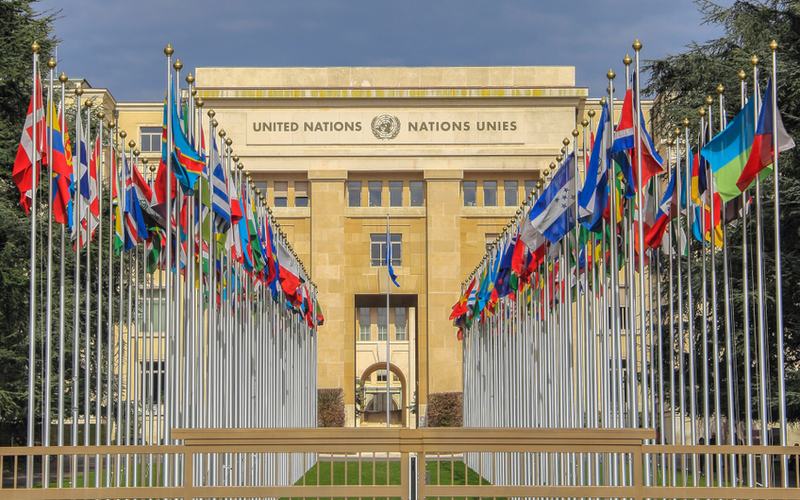
The United States clashed with Russia and China at the United Nations Security Council on March 12 over accusations that both nations are providing prohibited defense cooperation to Iran amid an escalating war. U.S. Ambassador Mike Waltz stated that Moscow and Beijing were blocking the work of a sanctions committee to protect their partner Iran and sustain military ties banned under U.N. resolutions.
The confrontation occurred as the U.S.-Israeli war against Iran entered its third week, following airstrikes on February 28 that killed Supreme Leader Ali Khamenei and other senior officials. Russia and China attempted to prevent discussion of the 1737 Committee, which enforces sanctions on Iran's nuclear, missile, and arms programs, but were overruled in an 11-2 vote.
U.S. and Western intelligence reports indicate Russia has supplied Iran with real-time intelligence, including satellite imagery from the Khayyam spy satellite and data on U.S. warship and aircraft positions across the Middle East. British Defense Secretary John Healey suggested Moscow is advising on drone tactics used in Iranian strikes. In December 2025, Iran signed a secret 500 million euro deal with Russia for 500 Verba man-portable air-defense launchers and 2,500 missiles, with deliveries scheduled from 2027 to 2029.
China's support has focused on technological enhancements and potential logistics. Beijing exported YLC-8B anti-stealth radars and integrated Iran's military navigation with its BeiDou-3 satellite system, improving electronic warfare capabilities. As of late February, Iran neared a deal to buy CM-302 supersonic anti-ship missiles from China, defying a U.N. embargo reimposed in 2025. A CNN report this week cited U.S. intelligence indicating China is considering financial aid, replacement parts, and missile components for Iran, though Beijing has avoided direct involvement to protect its oil imports.
Russia and China have provided diplomatic cover, convening emergency U.N. sessions to condemn the U.S. strikes and abstaining from resolutions criticizing Iranian retaliation. Russia's ambassador accused the U.S. of manufacturing hysteria to justify aggression, while China's representative called Washington the instigator of the crisis. Neither country has committed troops or conducted direct military operations.
The aid comes as Iran has fired missiles at U.S. bases and Gulf energy assets in retaliation, with Russian intelligence reportedly enabling more precise targeting. Moscow sent the first humanitarian aid shipment to Iran earlier this week, signaling continued ties despite its commitments in Ukraine. Analysts note the support helps Iran sustain defenses without drawing Russia or China into open conflict.

Comments
No comments yet. Be the first to share your thoughts.