
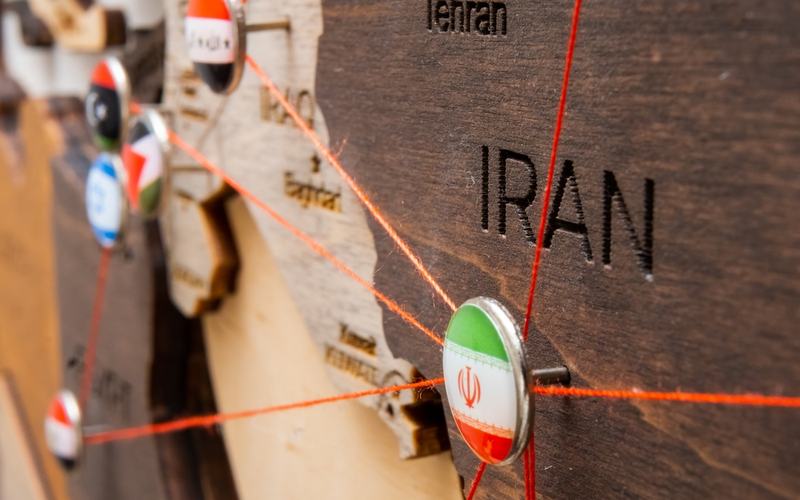
The Trump administration is nearing a possible military clash with Iran that could begin sooner and expand further than many Americans anticipate, according to a report citing sources familiar with internal discussions. U.S. operations, if launched, would likely involve a multi-week joint campaign with Israel targeting Iranian nuclear facilities, missile infrastructure, and key military assets.
One adviser to President Donald Trump told the outlet that “the boss is getting fed up,” estimating a high likelihood of kinetic action in the coming weeks despite some internal warnings about the risks of war.
Earlier this year, President Trump reportedly considered striking Iran following the regime’s violent suppression of domestic protests. Instead, the administration pursued a dual-track strategy of diplomatic outreach combined with a significant military buildup.
The U.S. presence in the Middle East has expanded sharply, now including two aircraft carriers, roughly a dozen major warships, hundreds of fighter aircraft, and layered air-defense systems. Recent deployments reportedly include F-22s, F-35s, and F-16s, alongside extensive cargo flights delivering weapons and ammunition.
Some officials expect that any engagement could resemble a sustained war rather than a limited strike. Israeli officials have reportedly prepared for a potential conflict scenario that could unfold within days.
At the same time, diplomatic channels remain open. Adviser Jared Kushner and envoy Steve Witkoff met in Geneva with Iranian Foreign Minister Abbas Araghchi this week. While both sides described limited progress, substantial gaps remain.
Vice President JD Vance said the administration prefers a negotiated outcome but emphasized that the president “reserves the ability to say when he thinks that diplomacy has reached its natural end.”
Sen. Lindsey Graham echoed the urgency, stating that strategic decisions on diplomacy and military action would likely come within weeks rather than months.
Iran’s Supreme Leader, Ali Khamenei, issued fresh threats during negotiations, while Tehran joined Russia and China in naval exercises in the Strait of Hormuz and conducted live-fire drills in the strategic waterway.
Satellite imagery cited in recent reports indicates Iran has reinforced sensitive military and nuclear facilities, including constructing protective structures and fortifying tunnel entrances at previously targeted sites.
The White House has not publicly detailed potential operational timelines, but officials acknowledge the coming weeks may prove decisive in determining whether diplomacy holds or the region moves toward a broader conflict.

Comments
No comments yet. Be the first to share your thoughts.