
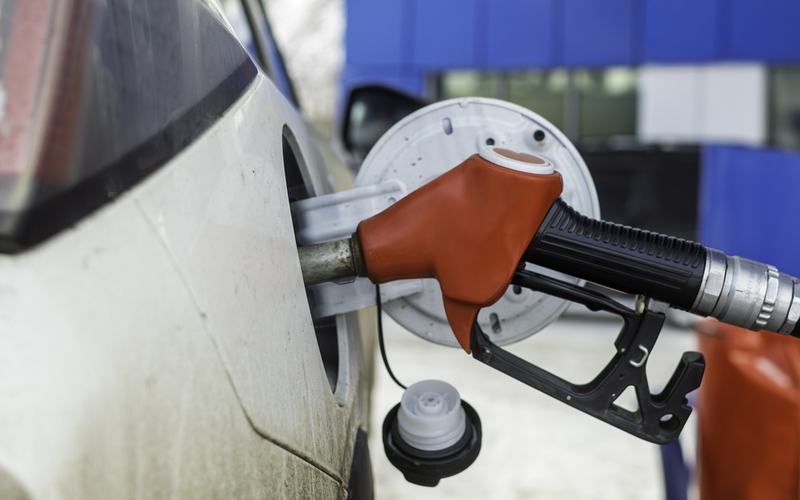
The national average price for a gallon of regular gasoline rose to $2.997 on Monday, bringing pump prices to the brink of $3 for the first time this year amid escalating tensions in the Middle East. The increase marks a gain of 1.3 cents from Sunday, 5.9 cents from a week ago, and 12.2 cents from a month ago, though prices remain 10.1 cents below where they stood at this time last year.
The climb follows coordinated U.S. and Israeli airstrikes over the weekend that killed Iran’s Supreme Leader, Ali Khamenei, prompting Tehran to shut down navigation through the Strait of Hormuz, a critical chokepoint through which roughly one-fifth of global oil shipments pass. At least three oil tankers have reportedly been damaged, and major shipping firms have begun rerouting vessels away from the area.
Brent crude surged as much as 10% to around $82 per barrel before easing, while U.S. crude jumped more than 6.5% to roughly $72.66. Analysts say movements in crude typically translate quickly to the pump, with every $1 increase in oil adding approximately 2.5 cents per gallon to retail gasoline prices.
Patrick De Haan, an analyst with GasBuddy, said the national average could reach $3 as wholesale increases filter through the supply chain. Tom Kloza, senior adviser at fuel-tracking firm OPIS, warned prices could climb to between $3.10 and $3.25 in short order, with further increases possible depending on how the conflict unfolds.
Gasoline prices had already been rising for four consecutive weeks before the latest strikes, driven in part by refineries switching to more expensive summer-blend fuel formulations required during warmer months to reduce evaporation and emissions. Seasonal demand is also strengthening ahead of spring travel. As recently as February, the national average stood at $2.85 following months of declines supported by ample supply.
Prices vary widely by state. New Hampshire currently posts the lowest average at $2.861 per gallon, followed by Delaware at $2.889, Rhode Island at $2.907, Connecticut at $2.920, and New Jersey. Hawaii remains the most expensive state at $4.385 per gallon, while the District of Columbia stands at $3.103.
Domestic gasoline inventories remain relatively strong at roughly 255 million barrels as of late February, equal to about 30 days of supply, which could help cushion sharper increases. OPEC+ has signaled plans to boost production by more than 200,000 barrels per day next month, and the White House retains the option of tapping the Strategic Petroleum Reserve if disruptions persist.
Financial markets reacted swiftly to the escalating conflict, with global equities declining and investors moving into safe-haven assets such as gold. No timeline has been provided for how long shipping disruptions in the Strait of Hormuz may continue.

Comments
No comments yet. Be the first to share your thoughts.