
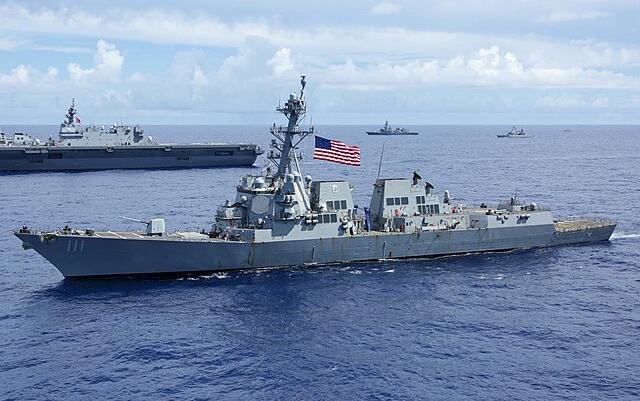
The U.S. Navy destroyer USS Spruance disabled the propulsion system of the Iranian-flagged cargo ship M/V Touska in the Gulf of Oman on Sunday, marking the first seizure under the American naval blockade of Iranian ports.
U.S. Central Command reported that the Touska, a Panamax container ship nearly 900 feet long, was intercepted while transiting the north Arabian Sea at 17 knots toward Iran's Bandar Abbas port. The vessel ignored repeated radio warnings to stop for over a six-hour period. The Spruance then directed the crew to evacuate the engine room before firing several rounds from its 5-inch Mk 45 gun through the hull into the propulsion area, effectively halting the ship.
Helicopter-borne Marines from the 31st Marine Expeditionary Unit boarded the immobilized vessel and took control. No casualties were reported, as the crew had been ordered to clear the targeted area. The ship, owned by the sanctioned Islamic Republic of Iran Shipping Lines, is now in U.S. custody and undergoing a search of its cargo, suspected to include dual-use equipment from recent voyages to Chinese ports.
President Donald Trump confirmed the action on Truth Social, stating the Navy gave fair warning before 'blowing a hole in the engine room,' and that Marines now hold the vessel. Central Command released video footage showing the warnings and gunfire, emphasizing the response was 'deliberate, professional, and proportional.' Since the blockade began on April 13, U.S. forces have intercepted 27 vessels, with 25 complying and turning back.
The blockade targets ships entering or leaving Iranian ports amid the ongoing 2026 Iran war and a fragile two-week ceasefire. It followed failed Islamabad talks and aims to pressure Tehran, which had closed the Strait of Hormuz. Iran responded by re-closing the Strait after the incident and launching drones at U.S. ships, which caused no damage.
Iranian officials condemned the seizure as 'armed piracy' and a ceasefire violation. The Foreign Ministry demanded the ship's release on Tuesday, vowing retaliation from its armed forces. Parliament speaker Mohammed Bagher Qalibaf stated it is 'impossible' for others to use the Strait of Hormuz while Iranian access is blocked. Tehran has indicated no plans for further U.S. talks.
The incident has heightened tensions as the ceasefire nears expiration. Global shipping faces disruptions, with vessels rerouting and oil prices rising. Lloyd's List reported at least 26 Iranian-linked ships evading the blockade. U.S. officials, including Adm. Brad Cooper of Central Command, affirmed close monitoring of all vessels of interest.

Comments
No comments yet. Be the first to share your thoughts.