
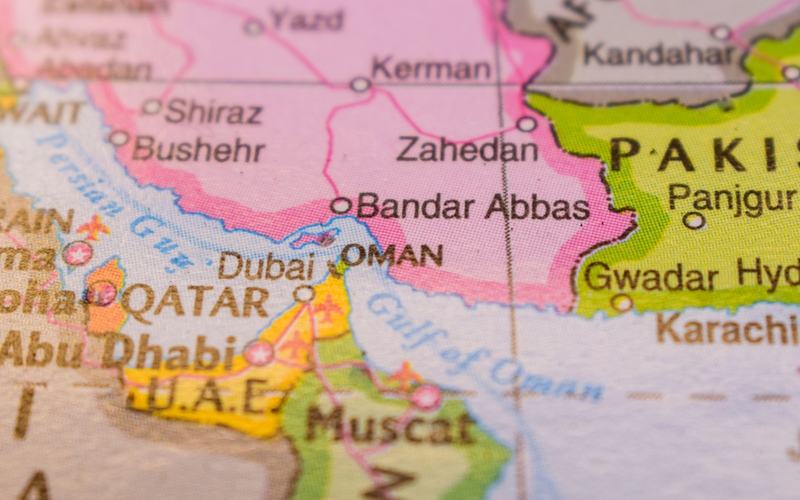
American forces destroyed an Iranian corvette off the coast of Bandar Abbas last week, marking another blow to Tehran's navy amid an escalating conflict.
Video footage circulating online showed the Shahid Sayed Shirazi, a Soleimani-class vessel launched in 2024, engulfed in flames with thick black smoke rising from its stern. The domestically built corvette was equipped with anti-ship cruise missiles, anti-aircraft systems, a helicopter pad, and guns, representing a key asset in Iran's fleet. Defense Secretary Pete Hegseth confirmed the sinking alongside others, including the Shahid Soleimani of the same class and the IRIS Dena frigate.
The incident occurred as part of Operation Epic Fury, a U.S.-Israeli campaign launched on February 28, 2026, targeting Iran's nuclear sites, missile infrastructure and military leadership, including Supreme Leader Ali Khamenei. U.S. Central Command reported striking nearly 2,000 targets with more than 2,000 munitions, severely degrading Iran's air defenses and destroying hundreds of ballistic missiles and drones.
Pentagon officials stated U.S. forces have taken out more than 20 Iranian ships from the Islamic Republic of Iran Navy and Islamic Revolutionary Guard Corps Navy, leaving none underway in the Persian Gulf, Strait of Hormuz, or Gulf of Oman as of March 3. Admiral Brad Cooper, CENTCOM commander, said the operations were ahead of schedule and vowed to continue until Iran's navy could no longer threaten international shipping. Satellite imagery confirmed destruction of the IRIS Makran drone carrier and other vessels moored at Bandar Abbas, Iran's main southern naval base, where ships failed to disperse before strikes.
In a separate action, a U.S. fast-attack submarine sank the IRIS Dena, a Moudge-class frigate, with a single Mk-48 torpedo in the Indian Ocean off Sri Lanka on March 3, the first such torpedo kill since World War II. Sri Lankan forces rescued 32 of the 180 crew members, with recovery efforts ongoing.
U.S. Navy carrier strike groups, including the USS Gerald R. Ford and USS Abraham Lincoln with F/A-18E Super Hornets, supported the operations alongside destroyers and littoral combat ships. Secretary of War Hegseth and Joint Chiefs Chairman Gen. Dan Caine briefed on March 4 that the strikes aimed to eliminate Iran's ability to harass shipping through the Strait of Hormuz, which carries 20% of global oil.
The conflict has paralyzed maritime traffic in the strait, with oil prices rising 12% and few tankers transiting. Iran has retaliated with attacks on regional targets, but U.S. forces report continued dominance. President Trump emphasized destroying Iran's navy to prevent nuclear advancement and secure sea lanes.

Comments
No comments yet. Be the first to share your thoughts.