
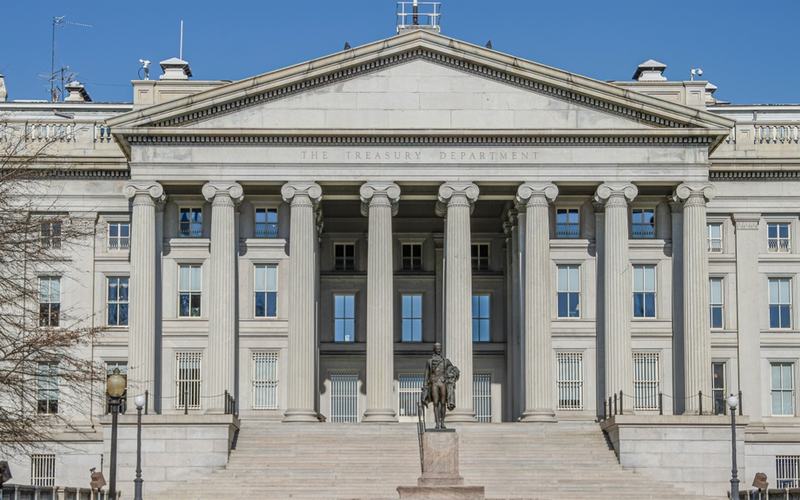
The U.S. Treasury Department has issued a license allowing the delivery and sale of certain Russian crude oil and petroleum products that were already loaded on vessels, officials announced Thursday. The authorization comes amid ongoing questions about whether Russia has been assisting Iran in the ongoing conflict, a claim Moscow has denied.
The license, issued by the Treasury’s Office of Foreign Assets Control (OFAC), covers transactions necessary to complete the sale, delivery, or offloading of Russian-origin oil and petroleum products loaded on vessels on or before 12:01 a.m. EDT on March 12. The authorization remains in effect through 12:01 a.m. EDT on April 11.
Treasury noted the license also permits related activities required to manage the shipments safely, including docking, anchoring, crew health and safety, emergency repairs, environmental mitigation, and services such as vessel management, crewing, bunkering, insurance, classification, and salvage.
The authorization does not permit any other prohibited transactions, including dealings involving Iran, the Iranian government, or Iranian-origin goods and services, except as specifically outlined in the license. Officials said the move appears to provide a temporary window for cargoes already at sea rather than opening the door to new Russian oil shipments beyond the March 12 cutoff.
The announcement follows a CNN report citing an intelligence official that Russia has been assisting Iran with advanced drone tactics derived from its war in Ukraine. The report indicated that such assistance has helped Iran employ Shahed drones to strike U.S. and Gulf targets in the Middle East.
U.S. special envoy Steve Witkoff said Russian leaders denied providing intelligence to Iran during recent calls with him and former President Donald Trump. Russian foreign policy adviser Yuri Ushakov reportedly reiterated the denial in a separate call with Witkoff and Jared Kushner. “So, you know, we can take them at their word,” Witkoff told CNBC, adding, “Let’s hope that they’re not sharing.”
The license reflects the U.S. approach to managing already-loaded Russian oil while maintaining restrictions aimed at limiting Moscow’s broader access to international markets.

Comments
No comments yet. Be the first to share your thoughts.