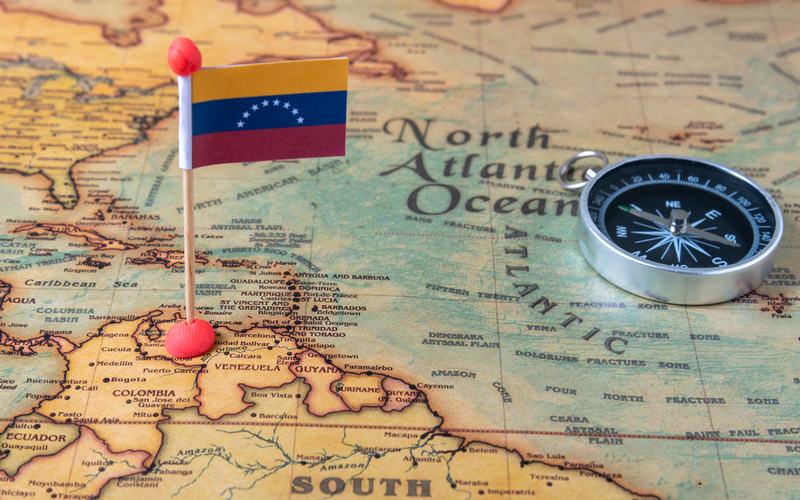
The United States and Venezuela agreed Thursday to reestablish full diplomatic relations, the State Department said, in a significant development following the ouster of former President Nicolás Maduro.
The announcement came after multiple rounds of talks between Trump administration officials and Venezuelan authorities. Relations between the two nations had been severed in 2019 during Donald Trump's first term, with the U.S. embassy in Caracas closed and operations moved to Bogotá, Colombia.
Maduro was captured by U.S. special forces on January 3, 2026, in a military operation dubbed Absolute Resolve, amid long-standing accusations of narcoterrorism and election fraud. Delta Force raided his compound at Fort Tiuna in Caracas, apprehending him and his wife, Cilia Flores, who were then transported to the USS Iwo Jima and flown to New York. Both pleaded not guilty to federal charges in Manhattan court on January 5.
Venezuela's Supreme Tribunal of Justice swiftly swore in Delcy Rodríguez, Maduro's former vice president and a loyalist, as acting president on January 5. Her government, still dominated by Maduro allies, has overseen the release of over 540 political prisoners through an amnesty bill passed in February, alongside reforms to the state-controlled oil sector to attract investment.
Initial diplomatic steps began shortly after the capture. On January 9, a U.S. delegation visited Caracas to explore embassy reopening, with Venezuela planning a reciprocal mission. By late January, a U.S. chargé d'affaires arrived to reopen the diplomatic mission after seven years. High-level meetings followed, including a call between President Trump and Rodríguez on January 14, CIA Director John Ratcliffe's visit on January 15 or 16, and the U.S. Energy Secretary's assessment of oil reforms in February.
The U.S. lifted select oil sanctions, unfroze assets, and facilitated medicine shipments, while reopening Venezuelan airspace for commercial flights. These moves supported a U.S.-outlined three-phase plan: stability, economic recovery, and transition to democratic elections.
Thursday's agreement emphasizes a phased process to foster a peaceful transition to a democratically elected government, aiding Venezuela's people amid ongoing economic challenges. Maduro loyalists continue to lead, navigating U.S. demands for reforms and opposition calls for broader inclusion from figures like María Corina Machado.
The deal signals thawing tensions but comes amid U.S. threats to indict Rodríguez on similar charges, reflecting Washington's leverage through oil access and security cooperation. No timeline for full embassy operations or elections was specified.

Comments
No comments yet. Be the first to share your thoughts.