
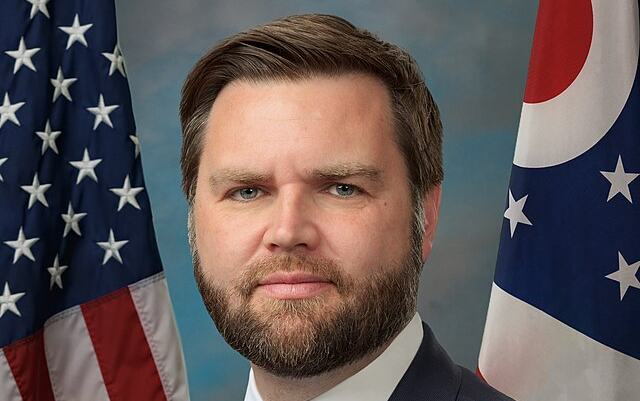
Vice President JD Vance held the inaugural meeting of the White House Task Force to Eliminate Fraud on Friday in the Indian Treaty Room of the Eisenhower Executive Office Building.
The gathering included high-profile administration officials such as Health and Human Services Secretary Robert F. Kennedy Jr., Agriculture Secretary Brooke Rollins, Treasury Secretary Scott Bessent, White House budget director Russ Vought, Housing and Urban Development Secretary Scott Turner, Education Secretary Linda McMahon, Homeland Security Secretary Markwayne Mullin, Small Business Administration Administrator Kelly Loeffler, Veterans Affairs Secretary Doug Collins, Department of Labor Inspector General Anthony D’Esposito and newly confirmed Assistant Attorney General for fraud Colin McDonald. Federal Trade Commission Chairman Andrew Ferguson attended as the task force's vice chair, alongside Deputy White House Chief of Staff Stephen Miller.
President Donald Trump announced the task force during his February State of the Union address and formalized it with an executive order signed on March 16. Vance chairs the group, with Ferguson as vice chair and representatives from multiple agencies, including Treasury, Justice, Agriculture, Labor, HHS, HUD, Education, VA, DHS, SBA, and the Office of Management and Budget.
The task force aims to coordinate a national strategy against fraud, waste, and abuse in federal benefit programs administered with state, local, tribal, and territorial partners. Its priorities include improving eligibility verification, preventing improper payments, sharing information across agencies, disrupting fraud networks, and supporting prosecutions.
Vance described fraud as an "existential" crisis that shreds social trust and steals both taxpayer money and essential services. "This is not just the theft of the American people’s money," he said. "It is also the theft of critical services that the American people rely on." He blamed the Biden administration for disabling long-standing anti-fraud protections, allowing the problem to explode, and pledged to reactivate safeguards while aggressively pursuing offenders.
The meeting spotlighted fraud allegations in Minnesota, including schemes involving Somali-owned daycare centers and phony autism therapy providers in Minneapolis. Officials cited a prior $300 million pandemic-era fraud case tied to the Feeding Our Future nonprofit, where defendants, mostly of Somali descent, exploited child nutrition programs. Estimates suggest up to half of the $18 billion in federal funds for 14 Minnesota programs since 2018 may have been stolen. In response, the administration has paused certain Medicaid reimbursements to the state until safeguards improve.
Vance highlighted similar issues in Medicare's durable medical equipment program, which has also seen payments paused over multistate fraud concerns. The task force plans regular meetings and will target vulnerabilities in states like California, Illinois, New York, Maine, and Colorado.
Agencies must submit fraud-prone processes within 30 days, adopt anti-fraud measures within 60 days, and deliver implementation plans within 90 days, with frequent updates to the president. Minnesota Governor Tim Walz criticized the Medicaid pause as political retribution against blue states.

Comments
No comments yet. Be the first to share your thoughts.