
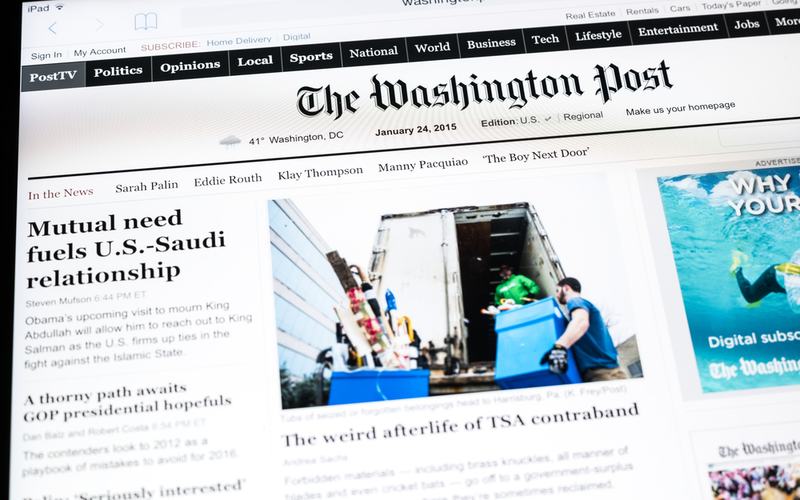
The Washington Post announced it will cut roughly one-third of its workforce and close entire sections, including sports and books, while drastically reducing the international desk, a sweeping restructuring executive editor Matt Murray described as necessary in the AI era amid years of declining readership and financial losses.
The layoffs affect all departments, reflecting a narrowing of ambitions for the once-dominant paper under owner Jeff Bezos. Murray framed the moves as a “strategic reset” in response to “difficult and even disappointing realities.” The Post has struggled financially for years, reportedly losing $100 million in 2023 alone, prompting publisher Will Lewis to replace former executive editor Sally Buzbee with Murray in June 2024 for a turnaround effort.
Public data shows the Post’s influence peaked during Trump’s first term but cratered from 2024 to 2026, with its share of tracked news links falling far behind The New York Times. Critics argue the newspaper’s anti-Trump bias, woke editorial slant, and insistence on legacy-focused reporting alienated readers and subscribers.
While Bezos continues to back the Post financially, the restructuring signals an existential reckoning for a paper once hailed as a “vital pillar of American journalism.” Staff complaints during Lewis’s 2024 call lamenting “four white men running three newsrooms” highlights internal tensions, yet the figures show the old model was unsustainable.
The Post’s slogan, “Democracy Dies in Darkness,” now faces the harsh reality of dwindling influence and continued financial strain.

Comments
No comments yet. Be the first to share your thoughts.