
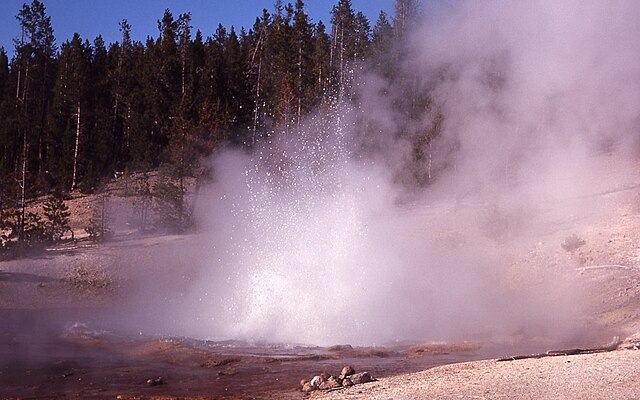
Echinus Geyser, recognized as the largest acidic geyser on Earth, erupted Feb. 7 for the first time since December 2020, according to the U.S. Geological Survey. The unexpected burst occurred in the Back Basin of the Norris Geyser Basin, one of the most dynamic thermal areas inside Yellowstone National Park.
Additional eruptions were recorded Feb. 9, 12 and 15. By Feb. 16, activity intensified, with bursts occurring every two to five hours, federal scientists reported.
Acidic geysers are uncommon because highly acidic water can dissolve the rock that forms a geyser’s underground plumbing system. In the case of Echinus, however, scientists say the acidity results from a mixture of acidic gases and neutral waters, preventing significant structural erosion of the surrounding rock.
The geyser’s chemical composition creates distinct mineral formations around the pool. A reddish border formed by arsenic, iron and aluminum encircles the water, while nearby silica-coated rocks give the feature its name.
Individual eruptions typically last two to three minutes and send water 20 to 30 feet into the air. During more active decades in the past, some eruptions reached heights of up to 75 feet. After each event, the pool’s water level drops substantially and requires roughly an hour to refill.
All recent eruptions occurred between mid- and late February. No additional activity has been observed since Feb. 24. Scientists say it remains unclear whether the geyser will continue erupting into the summer tourist season. Historically, active phases at Echinus have lasted only one to two months.
Geologists note that geothermal systems in Norris Geyser Basin frequently shift, leaving open the possibility that activity could resume without warning.

Comments
No comments yet. Be the first to share your thoughts.