
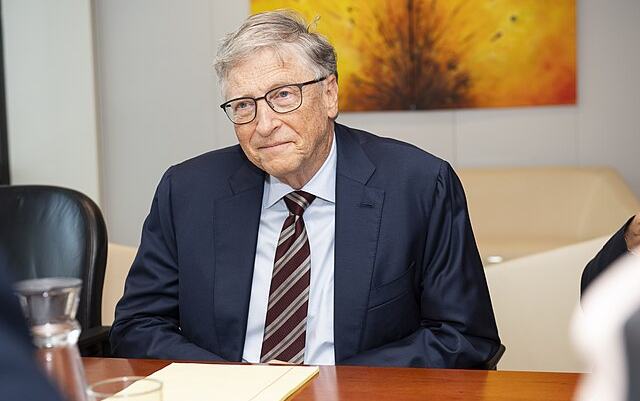
Microsoft co-founder Bill Gates warned Sunday that getting countries to cooperate on artificial intelligence could be more difficult than the Cold War negotiations that produced agreements limiting nuclear weapons.
Gates made the comparison while discussing whether the United States and China could establish the kind of cooperation that Washington and the Soviet Union eventually developed during the Cold War.
“This is more difficult than that was,” Gates said.
Despite the difficulty, Gates said governments will have to find ways to cooperate as AI technology continues to advance. He pointed to existing international cooperation on issues including aviation safety and nuclear proliferation as examples of countries working together despite major political differences.
“Humanity is all in this together,” Gates said.
Gates called for governments, law enforcement agencies and technology companies to work together on safeguards and monitoring systems designed to reduce the risks associated with increasingly powerful AI systems.
At the same time, he cautioned that efforts to establish safeguards should not “dramatically slow” the development of AI. The technology has continued to advance rapidly, with governments and companies competing to develop increasingly capable systems.
Gates also argued that Congress should establish regulations governing artificial intelligence, saying the technology industry should not be expected to police itself entirely.
The Microsoft co-founder has repeatedly warned about the potential dangers posed by advanced AI. He said the technology could become extraordinarily destructive if it is placed in the hands of people who intend to use it to cause harm.
“AI is certainly powerful enough to drive events that cause a billion deaths,” Gates said. He added that there has never been a weapon as powerful as the combination of people with malicious intentions and the latest AI tools.
Gates said he welcomes discussions within the technology industry about the risks posed by AI, but warned against viewing the development of the technology exclusively as a competition between companies or nations.
He argued that the broader question should be how governments, businesses and researchers want to shape the technology as it becomes more powerful.
“It’s very scary that we don’t have all of the thinkers saying, ‘How do we want to shape this?’” Gates said.

Comments
No comments yet. Be the first to share your thoughts.