
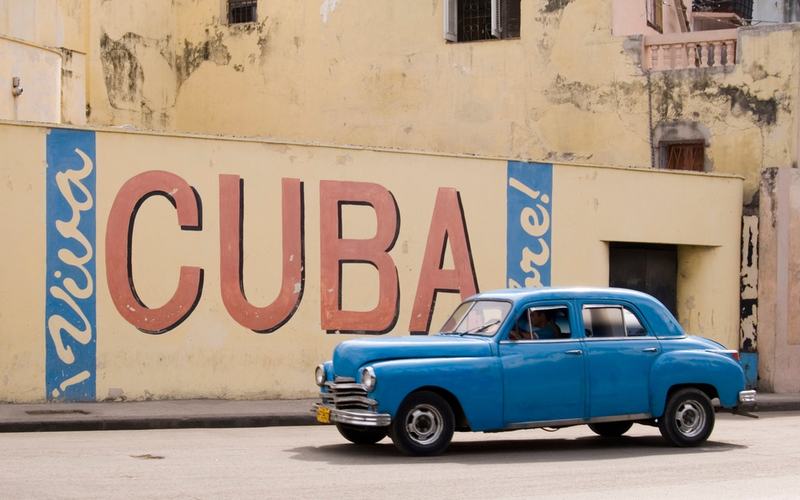
Cuba is facing a deepening economic and humanitarian crisis, with widespread poverty, food and medicine shortages, unreliable electricity and mass emigration exposing the communist government’s growing inability to meet basic needs. As state services deteriorate, Catholic churches, evangelical congregations and Afro-Cuban religious communities are stepping in to help residents struggling to survive.
A report by The Atlantic staff writer Robert Worth, based on his travels across Cuba in August, describes a country where government food rations are unreliable, public-sector salaries barely cover basic expenses, and medical facilities lack essential supplies. In eastern Cuba, Worth encountered widespread poverty, abandoned buildings, and residents who said they could no longer depend on the government for assistance.
The financial strain is particularly severe for public employees, including doctors and teachers. According to the report, the average monthly salary for Cuban public-sector workers was less than $10, while a carton of eggs could cost more than $7. The figures illustrate how difficult it has become for ordinary Cubans to afford necessities through official wages.
The healthcare system has also deteriorated as medical professionals leave the island and hospitals and clinics struggle to obtain medicine and supplies. Worth described a clinic serving residents of Cayo Granma where a single nurse was responsible for hundreds of patients amid medicine shortages and unreliable access to clean water.
The crisis has fueled growing frustration with the communist government. Despite decades of political repression and surveillance, Worth encountered Cubans willing to openly criticize the system and question the authorities’ ability to provide for their people.
Cuba’s problems follow decades of economic decline and have been compounded by the collapse of tourism during the COVID-19 pandemic and reduced remittances from relatives abroad. Mass emigration has further depleted communities, separated families, and reduced the population available to sustain the country’s economy and public services.
President Donald Trump’s administration has also imposed an oil blockade that cut Cuba off from inexpensive Venezuelan oil following the U.S. military’s capture of Venezuelan leader Nicolás Maduro in January. However, Worth reported that none of the Cubans he interviewed during nine days of travel blamed Trump or the United States for their hardships. Several instead pointed to failures by their own government and the lasting economic damage caused by the pandemic.
As government services weaken, religious organizations are taking on a larger role in supporting vulnerable Cubans. Churches distribute meals, help residents obtain medicine, and organize assistance for people who have few other sources of support. Some evangelical congregations operate out of private homes, while larger churches coordinate efforts to identify families and individuals in need.
In the eastern city of Baracoa, one Pentecostal congregation has expanded its assistance beyond its 1,100 regular members, coordinating support for sick residents and delivering food and medication. The Assemblies of God denomination has also grown in the region, expanding from two churches to 40 over the past three decades, according to the report.
The extent of Cuba’s religious revival is difficult to measure because reliable independent data on religious affiliation are unavailable. Still, people interviewed by Worth described a growing evangelical presence, alongside renewed interest in Catholicism and Santeria, an Afro-Cuban religious tradition.
A Catholic priest told Worth that the church was reclaiming property seized by the state after Fidel Castro’s 1959 revolution. The priest predicted that religious institutions would play a major role in any future political transition, reflecting their growing importance as organizations operating outside the communist government’s direct control.
The U.S. government has also supported faith-based organizations as channels for humanitarian assistance. According to the report, a $100 million American aid package approved in May was conditioned on distributing assistance through faith-based groups and humanitarian organizations.
Cuba’s communist leadership continues to maintain its political institutions and security apparatus, but the deterioration of basic services is raising questions about its ability to sustain programs it has long promoted as achievements of the revolution, particularly healthcare and education.
The growing reliance on churches to provide food, medicine, and other essential assistance illustrates how institutions outside the state are increasingly filling the gaps left by the government. As economic hardship deepens and more Cubans leave the island, the communist regime faces mounting pressure over its ability to provide for the population it has governed for decades.

Comments
No comments yet. Be the first to share your thoughts.