
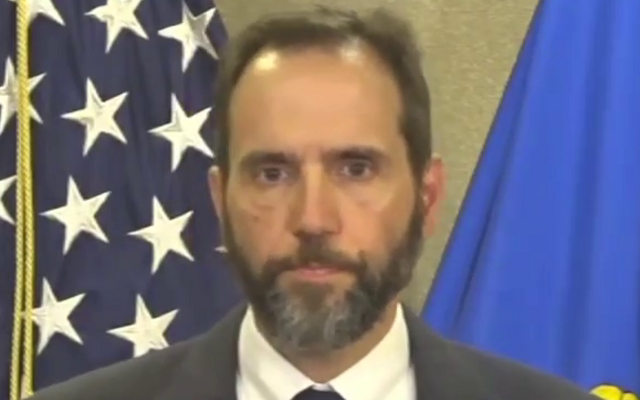
Newly unearthed internal Department of Justice emails show prosecutors under former special counsel Jack Smith sought phone records from a wide array of Republican lawmakers during the investigation into efforts to challenge the 2020 election results.
The emails reveal prosecutor Timothy Duree compiling a list of 16 current and former GOP members of Congress whose toll records, showing dates, times, and numbers called but not call contents, he proposed subpoenaing. The targeted period spanned October 1, 2020, to January 31, 2021, focusing on contacts with key figures like Donald Trump's chief of staff Mark Meadows and Rudy Giuliani.
Among the newly highlighted names were Rep. Andy Biggs of Arizona, Rep. Brian Babin of Texas, and then-Rep. Lee Zeldin of New York is now the head of the Environmental Protection Agency in the Trump administration. Duree's list also included Reps. Mo Brooks, Matt Gaetz, Paul Gosar, Louie Gohmert, Jody Hice, and Gohmert's chief of staff Connie Hair, alongside seven senators such as Ted Cruz and Marsha Blackburn. It remains unclear if subpoenas were ultimately issued for all on the list, though public disclosures confirm records were obtained for several, including Biggs' colleague Rep. Scott Perry and former Speaker Kevin McCarthy.
The effort stemmed from the FBI's "Arctic Frost" probe, which evolved into Smith's case alleging Trump illegally sought to overturn the election. Prosecutors drew from the January 6 Committee's report to identify lawmakers interacting with Trump allies on the day of the Capitol events.
Republicans decried the moves as unconstitutional overreach. Rep. Biggs called it "a level of government surveillance that Stalin would be proud of" and an "absurd abuse of power." House Judiciary Chairman Jim Jordan highlighted the targeting of even more members, while Senate Judiciary Chairman Chuck Grassley has led scrutiny, demanding explanations from telecom giants like Verizon, AT&T, and T-Mobile for handing over records from about 20 GOP lawmakers without notification.
Earlier revelations in October 2025 identified records obtained for Sens. Lindsey Graham, Josh Hawley, Tommy Tuberville, Ron Johnson, Cynthia Lummis, Bill Hagerty, Dan Sullivan, Marsha Blackburn, and Rep. Mike Kelly. Grassley labeled it "political weaponization," noting no clear predicate for the subpoenas.
Smith's team defended the subpoenas as "entirely proper" and in line with DOJ policy, rejecting claims of wiretapping or spying. The special counsel testified before the House Judiciary Committee, standing by the investigative steps despite concerns over the Speech or Debate Clause protections for lawmakers.
Smith dropped the federal election case against Trump after his 2024 victory, citing DOJ policy against prosecuting sitting presidents. Republican-led probes continue, with hearings grilling telecom executives and calls for accountability in what critics view as partisan misuse of federal power.

Comments
No comments yet. Be the first to share your thoughts.