
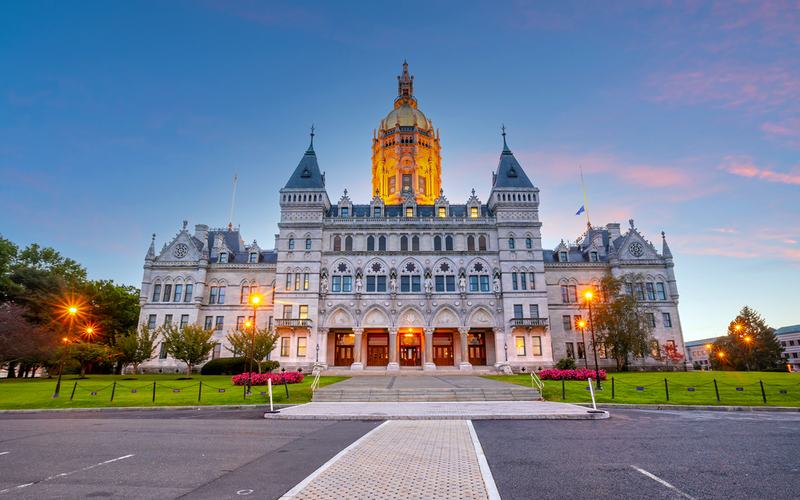
The Department of Justice has filed a lawsuit against the state of Connecticut and the city of New Haven, challenging policies that limit cooperation with federal immigration authorities and provide protections to unauthorized immigrants. The complaint, filed in U.S. District Court, targets Connecticut’s Trust Act and New Haven’s “welcoming city” executive order.
Federal officials contend the policies interfere with enforcement operations carried out by Immigration and Customs Enforcement, arguing they restrict compliance with immigration detainers, limit information sharing, and prevent federal agents from accessing individuals in state custody. The DOJ claims these measures violate the Supremacy Clause of the Constitution by conflicting with federal law.
Assistant Attorney General Brett Shumate said the lawsuit is intended to end what he described as ongoing obstruction of federal enforcement efforts. According to the complaint, Connecticut has complied with fewer than 20 percent of immigration detainer requests since 2020, requiring federal agents to locate and arrest individuals after their release from custody.
The filing cites specific cases, including an instance in which a convicted offender was released from state custody despite a federal detainer request, requiring agents to apprehend the individual in the community.
Connecticut officials have defended the policies, arguing they are consistent with constitutional limits on federal authority. Gov. Ned Lamont said the state’s laws do not prevent federal enforcement but instead reflect the principle that the federal government cannot compel states to use their resources for immigration operations.
New Haven Mayor Justin Elicker also pushed back, stating the city’s policy is lawful and criticizing the federal government’s claims as inaccurate. He said the city intends to defend its position in court.
The lawsuit is part of a broader effort by the Justice Department to challenge sanctuary policies nationwide. Similar cases have been filed against major jurisdictions, including Chicago, Boston, New York City, and Los Angeles, with mixed outcomes so far, as legal battles continue in federal courts.

Comments
No comments yet. Be the first to share your thoughts.