
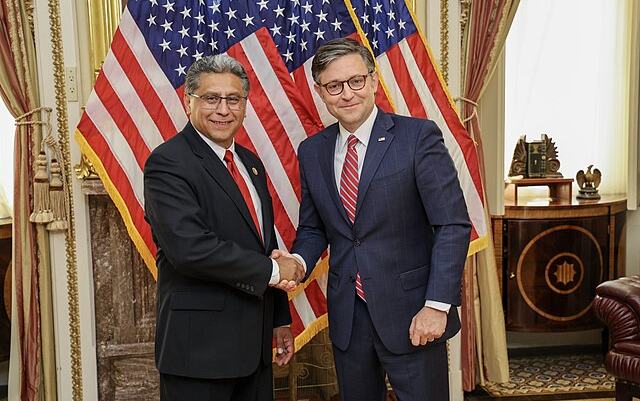
House Speaker Mike Johnson announced plans Wednesday to bring a clean 18-month extension of Section 702 of the Foreign Intelligence Surveillance Act to the floor next week, drawing fire from conservative hard-liners who demand warrant requirements for searching Americans' communications.
Section 702 authorizes warrantless surveillance of non-U.S. persons abroad but often incidentally collects Americans' data, which intelligence agencies can query without a warrant in what critics call "backdoor searches." The program expires April 20 unless Congress acts. President Donald Trump and top GOP leaders support the short-term renewal without new restrictions, citing national security needs amid threats like those from Iran.
Johnson expressed confidence in corralling votes, telling reporters, "They’ll get there," and "I can handle it. We’ll get it done." Trump administration officials briefed skeptical House Republicans on Tuesday but failed to sway key holdouts, including Freedom Caucus Chair Andy Harris and Reps. Lauren Boebert and Anna Paulina Luna.
Boebert issued an ultimatum: "Warrants or bust," warning a clean bill "will not pass." Luna threatened to vote against the procedural rule and final bill unless paired with the SAVE America Act on elections. Rep. Chip Roy, Keith Self and Warren Davidson also seek amendments for reforms, with Davidson noting "a lot of appetite for reform." Self added that "the warrantless approach is still not working."
House Judiciary Chair Jim Jordan, who opposed renewal in 2024, reversed course and pledged support for the extension. He cited 56 reforms from the last reauthorization that slashed improper FBI queries of Americans' data from nearly 3 million in 2022 to about 9,000 last year, plus enhanced audits and oversight.
The 2024 renewal, passed after intense debate, extended the program two years following revelations of FBI abuses. Proponents argue it remains vital for counterterrorism and foreign intelligence, with Intelligence Chair Rick Crawford calling it what "the president has asked for."
Opponents, including a bipartisan group, introduced the Government Surveillance Reform Act last week. Led by Davidson and Rep. Zoe Lofgren (D-Calif.), with Sens. Mike Lee (R-Utah) and Ron Wyden (D-Ore.), it would reauthorize Section 702 for four years while mandating warrants for U.S. persons' data, banning data broker purchases without warrants and repealing expansions allowing forced spying by companies.
GOP leaders have not ruled out amendments but prefer a clean bill to avoid Senate complications. If the procedural vote fails, they may pursue a suspension of the rules needing two-thirds support, potentially with Democratic help on final passage. The White House views quick renewal as a priority, but hard-liners' resistance could force a shorter extension or post-recess action before the deadline.

Comments
No comments yet. Be the first to share your thoughts.