
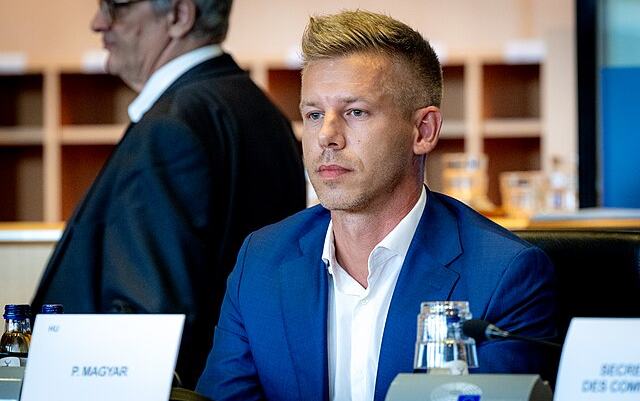
Hungarian Prime Minister Viktor Orbán was voted out of office Sunday as Hungarian voters delivered a decisive victory to opposition challenger Péter Magyar in one of the most closely watched elections in Europe this year.
The election drew historic participation, with turnout surpassing 77%, the highest in Hungary’s post-Communist era. Voters cast ballots nationwide in a race widely viewed as a referendum on Orbán’s leadership after 16 years in power.
Orbán, leader of the Fidesz party and a longtime ally of Donald Trump, had positioned himself as a nationalist defender of Hungary’s sovereignty while maintaining closer ties with Russia and frequently clashing with the European Union. His government faced criticism from EU officials over its stance on Ukraine, media restrictions, and allegations of corruption.
Magyar, a former Fidesz insider who broke with the ruling party in 2024, surged politically in a short period, campaigning on anti-corruption reforms and improvements to public services such as healthcare and transportation. His Tisza party gained traction among voters seeking political change and a shift in Hungary’s direction within Europe.
During the campaign, Magyar framed the election as a choice about Hungary’s future alignment, contrasting continued ties with Russia against deeper integration with Western institutions. His message resonated with a significant portion of the electorate amid growing dissatisfaction with economic conditions and governance.
The election outcome represents a major turning point for Hungary, which has played an outsized role in European politics under Orbán. As one of the European Union’s longest-serving leaders, he frequently used Hungary’s veto power to block key EU initiatives, including major financial aid packages to Ukraine.
Despite structural advantages that favored the ruling party, including control over large portions of the media landscape and an electoral system shaped during his tenure, Orbán was unable to secure another term.
The result is expected to have ripple effects beyond Hungary, as European leaders reassess alliances and policy direction within the bloc. It also marks a setback for populist movements that had pointed to Orbán’s government as a model of nationalist governance.
Magyar is expected to begin the process of forming a new government in the coming days, with attention turning to how his administration will approach relations with the European Union, Russia, and neighboring countries.
The transition ends one of the most dominant political eras in modern Hungarian history and opens a new chapter as the country recalibrates its domestic and foreign policy priorities.

Comments
No comments yet. Be the first to share your thoughts.