
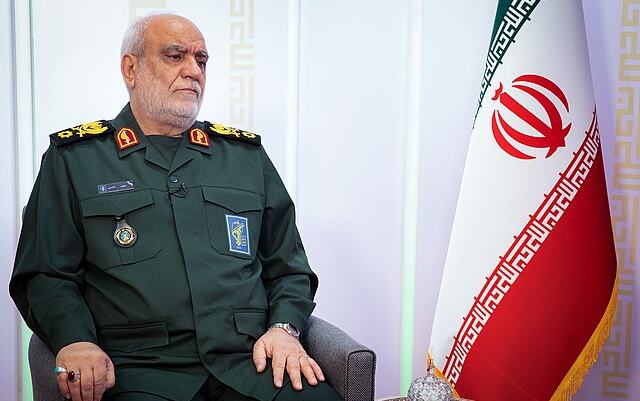
Israel confirmed that its forces assassinated Majid Khademi, the head of the Islamic Revolutionary Guard Corps' (IRGC) intelligence organization, in an airstrike early Monday. Iranian state media reported the death, accusing the United States and Israel of carrying out a "terrorist attack by the American-Zionist enemy."
Khademi had led the IRGC's powerful intelligence arm since June 2025, following the killing of his predecessor, Mohammad Kazemi, in Israeli strikes during Operation Rising Lion. The organization focuses on domestic surveillance, counter-espionage, and countering foreign influence, operating alongside Iran's civilian intelligence ministry. Israel Defense Minister Israel Katz and the Israel Defense Forces (IDF) described the strike as a severe blow to the IRGC.
The assassination marks the latest in a series of targeted killings of senior Iranian officials amid the ongoing war that began on February 28, 2026. Previous strikes eliminated figures such as IRGC Navy Commander Alireza Tangsiri, Navy Intelligence Director Behnam Rezaei, Intelligence Minister Esmaeil Khatib, and security chief Ali Larijani, among dozens of others. The US and Israel have conducted joint operations, with the IDF highlighting cooperation in eliminating threats.
The conflict escalated after Iran blockaded the Strait of Hormuz, prompting US and Israeli responses across Iran, Lebanon, the UAE, and Saudi Arabia. Thousands have died, predominantly in Iran and Lebanon. Recent strikes included attacks near Tehran, causing civilian casualties and infrastructure damage like gas outages.
Diplomatic efforts intensified late Sunday with a 45-day ceasefire proposal from Egyptian, Pakistani, and Turkish mediators, calling for reopening the Strait of Hormuz. US President Donald Trump set a Tuesday deadline for Iran to comply, threatening further action including strikes on power plants and bridges if no deal is reached, warning of "hell." Iran rejected the terms, vowing retaliation and deeming deadlines incompatible with negotiations.
Analysts note Iran's decentralized command has allowed it to sustain operations despite leadership losses, but the strikes have disrupted key security and military coordination.

Comments
No comments yet. Be the first to share your thoughts.