
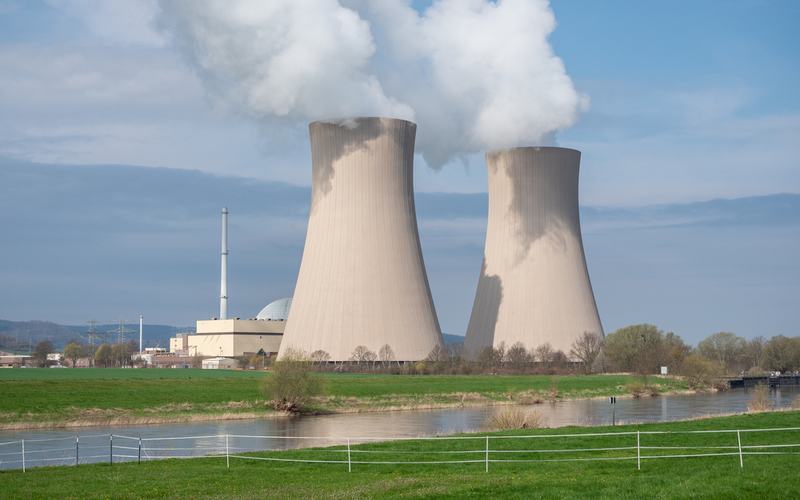
Kentucky and West Virginia, traditionally dependent on coal, are advancing legislation to bring nuclear energy into their grids as energy affordability concerns mount.
Kentucky’s Senate passed Senate Bill 57 on March 27, creating a Nuclear Reactor Site Readiness Pilot Program. The program authorizes the Kentucky Nuclear Energy Development Authority to provide grants covering up to one-third of costs, up to $25 million, for partners pursuing nuclear facility permits, including early site approval, construction, and operational licensing from the U.S. Nuclear Regulatory Commission. Republican State Sen. Danny Carroll, the bill’s sponsor, said Kentucky could see a reactor operational within 10 to 15 years. Carroll emphasized that coal will remain central to energy production during the transition.
“When you look at newer technologies, which are much safer, repurposing and recycling of spent fuel is advancing, and concerns over waste are decreasing,” Carroll said. “Nuclear is green energy, and we have established that in the Commonwealth.”
In West Virginia, Gov. Patrick Morrisey approved House Bill 5381 on the same day, shifting the Office of Energy’s focus toward energy independence and production. HB 5381 requires a long-term policy embracing coal, natural gas, nuclear, hydropower, hydrogen, and geothermal energy by Dec. 1. The policy prioritizes stable baseload generation, efficiency, low-cost energy, and domestic production to reach 50 gigawatts of capacity by 2050, up from the current 16 gigawatts.
Both states currently have no nuclear facilities. West Virginia repealed a nuclear ban enacted in 1996, citing past waste disposal concerns, and is now positioning nuclear alongside other energy sources. Carroll highlighted potential partnerships with businesses, including AI data centers, to co-develop nuclear projects. West Virginia recently approved Google’s data center in Putnam County, with the tech giant covering all energy costs and committing to replenish more water than consumed by 2030.
The Trump administration is backing broader energy expansion efforts. Interior Secretary Doug Burgum announced the cancellation of a Biden-era offshore wind project, redirecting funds to U.S. fossil fuel energy investments.
Both Appalachian states see nuclear power as a path to energy security, economic growth, and more affordable electricity while maintaining coal as a transitional backbone.

Comments
No comments yet. Be the first to share your thoughts.