
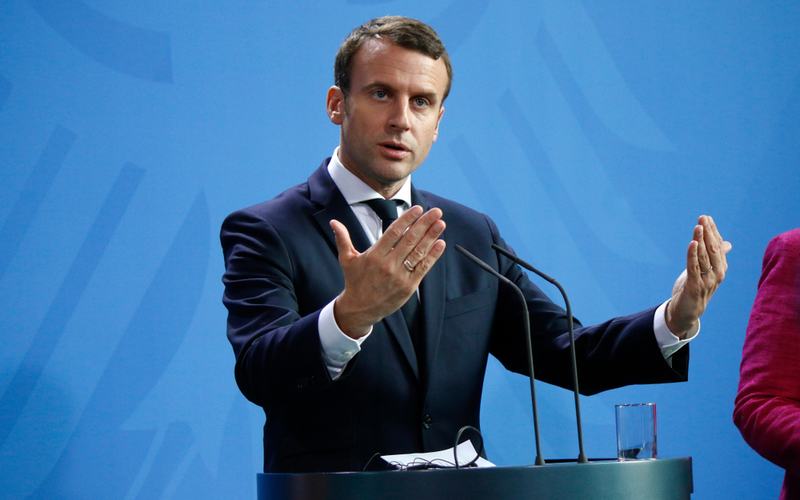
French President Emmanuel Macron sharply criticized President Donald Trump on Thursday for undermining NATO with inconsistent statements that sow doubt about Washington's dedication to the alliance.
Speaking during an official visit to South Korea, Macron said alliances like NATO rely on unspoken trust. "If you create doubts every day about your commitment, you empty [NATO] of its substance," he told reporters. He added that partners who sign treaties should honor them without daily commentary questioning their validity.
Macron's remarks came amid escalating tensions over the monthlong U.S.-Israeli military campaign against Iran, which began with airstrikes on February 28. Trump has berated NATO allies for refusing to provide support, including airspace access for offensive operations and military bases. European nations have denied these requests and pursued independent efforts to secure trade routes through the Strait of Hormuz, which Iran has effectively closed, driving up global energy prices.
At a private White House lunch on Wednesday, Trump mocked Macron personally while criticizing the alliance. Mimicking a French accent, he said, "I call up France, Macron, whose wife treats him extremely badly," and labeled NATO a "paper tiger" that has treated the U.S. poorly. Trump told Reuters he is "absolutely without question" considering a U.S. withdrawal from NATO and described an exit to the Daily Telegraph as "beyond consideration."
Macron dismissed the personal remark about his wife, Brigitte, as "neither elegant nor up to standard" and not meriting a response. He also faulted Trump for shifting goals in the Iran war, urging seriousness. "When you want to be serious, you don’t say the opposite every day of what you said the day before," Macron said. "This is not a show."
The exchange highlights growing European frustration with Trump's approach. Officials in pro-U.S. nations like Britain have discussed bolstering independent European security. A Thursday call led by Britain rejected Trump's calls for forceful action to reopen the Strait of Hormuz before the conflict ends.
Trump has long pressed NATO members to increase defense spending toward the 2 percent GDP target, a demand many allies have struggled to meet. His latest criticisms tie into their reluctance to back the Iran operation, which remains unpopular in Europe due to economic fallout from disrupted oil supplies.

Comments
No comments yet. Be the first to share your thoughts.