
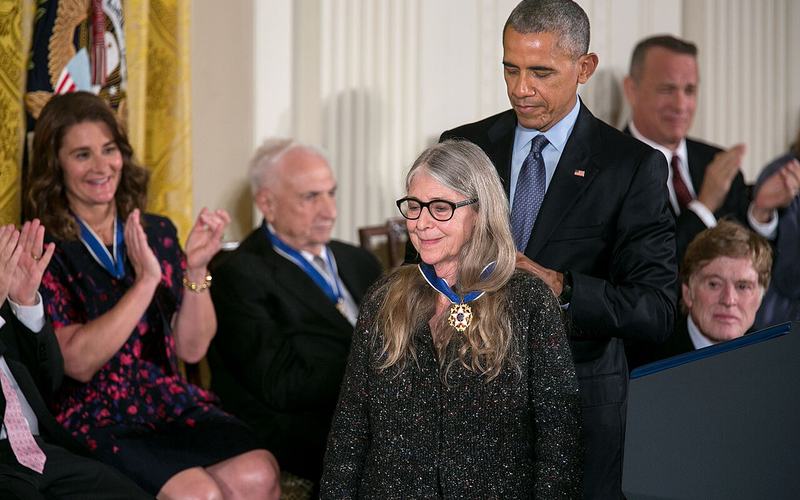
Margaret Hamilton, the pioneering computer scientist whose software engineering work helped land American astronauts on the moon, died on September 30 in Cambridge, Massachusetts. She was 90.
The Massachusetts Institute of Technology, where Hamilton led the software team for NASA's Apollo program, confirmed her death. She had been the first woman hired as a programmer on the Apollo project in 1965 and eventually directed a team of more than 100 engineers.
Hamilton's code powered the onboard guidance computers for the command and lunar modules. During the Apollo 11 landing in 1969, her team's software managed unexpected computer overloads, allowing Neil Armstrong and Buzz Aldrin to complete the historic mission successfully. She is credited with popularizing the term "software engineering" to describe the rigorous discipline required for such complex systems.
Born Margaret Heafield on August 17, 1936, in Paoli, Indiana, she earned a mathematics degree from Earlham College in 1958. After moving to Cambridge, she joined MIT's Instrumentation Laboratory and contributed to early space and defense projects before focusing on Apollo.
Following her NASA work, Hamilton founded Hamilton Technologies, continuing to advance software reliability methods. In 2016, President Barack Obama awarded her the Presidential Medal of Freedom for her contributions to space exploration and computing.
Hamilton is survived by her daughter Lauren, a son-in-law, two grandsons, and four great-grandchildren. Her death marks the passing of a key figure in America's space achievements during the Cold War era, when individual innovation and disciplined engineering helped secure victory in the race to the moon.

Comments
No comments yet. Be the first to share your thoughts.