
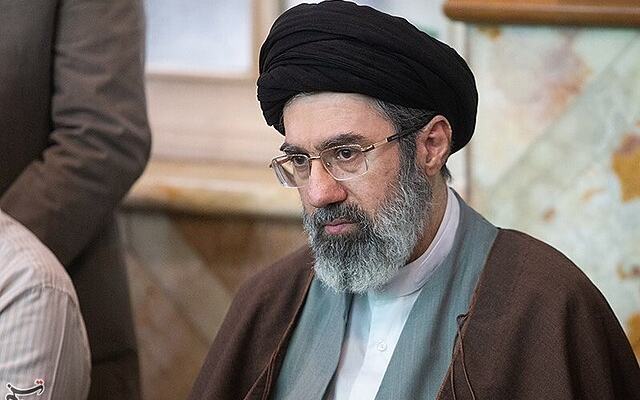
The continued absence of Iran’s supreme leader, Mojtaba Khamenei, has left U.S. and Israeli intelligence agencies uncertain about his condition and whether he is actively leading the country, according to multiple reports.
Khamenei, who assumed power after his father was killed in late February strikes, has not appeared in public since those attacks. His only recent communication came in the form of a written statement released during Nowruz, with no accompanying video or audio—an unusual departure from past practice.
U.S. officials say the lack of visual confirmation is a significant concern. One official described the situation as a “big red flag,” noting that Iranian leaders typically use such occasions to project strength and continuity.
Defense Secretary Pete Hegseth has claimed Khamenei was wounded in the strike that killed his father and may be severely injured, though no independent confirmation has been provided.
Israeli and U.S. intelligence sources say they have no clear evidence that Khamenei is actively issuing orders. Some officials have questioned whether he is fully in control, while acknowledging it would be unlikely for Iran to elevate a leader incapable of governing.
Despite the uncertainty, Iranian state messaging continues to portray stability. In his written statement, Khamenei claimed Iran had delivered a significant blow to its enemies and dismissed expectations that recent military actions would destabilize the regime.
Analysts caution that the lack of public appearances may not be definitive proof of incapacity, noting that security concerns or injuries could limit his visibility without preventing him from exercising authority behind the scenes.
With ongoing conflict in the region and continued strikes targeting Iranian leadership, the uncertainty surrounding Khamenei’s status adds another layer of volatility to an already tense geopolitical situation.

Comments
No comments yet. Be the first to share your thoughts.