
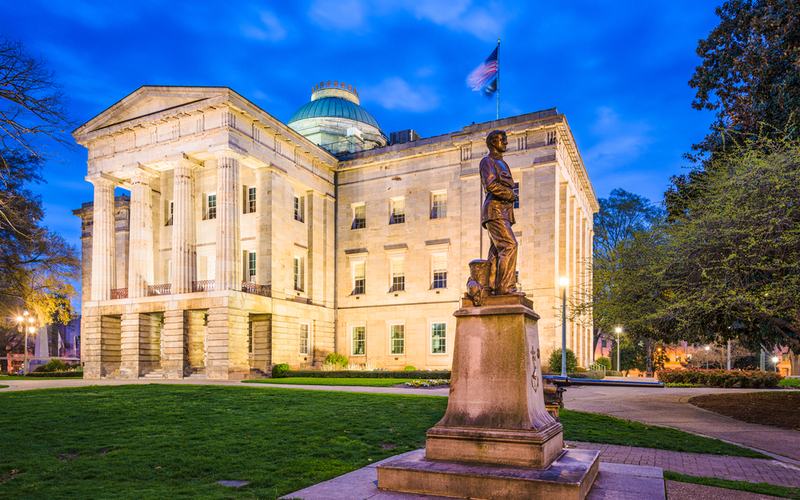
North Carolina Democrats moved close to dominating state government after sweeping gains in the November 3 elections. The party captured a majority in the House of Representatives for the first time since 2010, ending 16 years of Republican control in that chamber.
Unofficial results show Democrats holding 71 seats in the 120-member House compared with 48 for Republicans and one unaffiliated winner. Republicans entered the election with a 71-47 advantage. Democrats also won every statewide race on the ballot and flipped multiple U.S. House seats.
In the state Senate, Republicans retained a narrow 26-24 majority. One race remains undecided, with incumbent Republican Sen. Danny Britt leading Democratic challenger Catina Hamm by roughly 228 to 268 votes as of November 11. That margin falls within the range for a recount or further provisional ballot review.
If the seat flips or ends in a tie, Democrats would hold an even split in the Senate. Democratic Lt. Gov. Rachel Hunt would then break ties, giving the party effective control of both legislative chambers.
Democratic Gov. Josh Stein, who took office in 2025, would work with aligned majorities in the House and a cooperative Senate. Stein has called for lawmakers to focus on housing, electricity, and healthcare costs.
Republicans previously held veto-proof supermajorities in both chambers. The new balance eliminates that power and shifts the legislative agenda toward Democratic priorities when the General Assembly convenes in January.
The results mark a significant reversal from prior cycles, when Republicans maintained unified control of the legislature for over a decade. Democrats gained more than 20 House seats in the midterm contest.

Comments
No comments yet. Be the first to share your thoughts.