
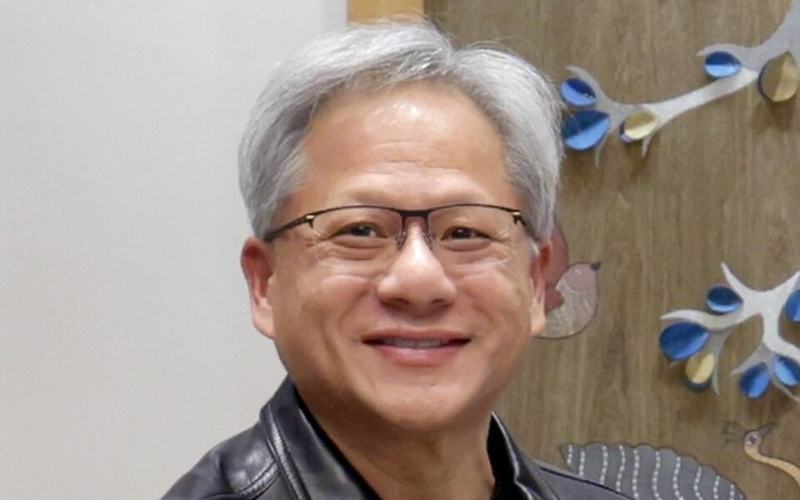
Nvidia’s board of directors voted unanimously on Monday to reinstate co-founder Jensen Huang as president, chief executive officer, and a member of the board, effective immediately. The decision ends an 11-day leadership crisis that began with Huang’s resignation on November 12 amid reports of extramarital affairs, including one involving a woman U.S. officials had suspected of links to Chinese intelligence.35
In a company announcement, the board said it reached the decision after a series of discussions and meetings with Huang, following which it was “satisfied with respect to Mr. Huang’s candor and ability to lead NVIDIA.” Directors also received input from senior levels of the U.S. government and stated they are “confident that Mr. Huang’s reinstatement poses no national security risk.” Board Chair Harvey C. Jones, the company’s first independent chair and a former Synopsys executive, said the board believes Huang “is the right person to lead NVIDIA” and that his return serves the best interests of stockholders, employees, partners, and customers. Jones thanked interim CEO and longtime CFO Colette Kress for her service during the interim period; she will continue as CFO.38
Huang, who co-founded Nvidia in 1993 and led it for 33 years from a gaming graphics company to the dominant supplier of AI chips, said he was “honored to return” to lead “one of the most consequential technology companies in the world at the beginning of a new industrial revolution.” He added that he takes the role “with the greatest humility and renewed commitment,” thanked the board, Jones, Kress, employees, partners, and his family, and concluded, “I can’t wait to get back to work.”38
The reinstatement marks a sharp reversal. Just six days earlier, on the company’s November 17 earnings call, Jones had told investors that the board had unanimously accepted Huang’s voluntary resignation and “does not intend to reinstate Jensen as CEO.” Huang had publicly stated on November 17 that he would be honored to return if the board concluded it was in the best interests of shareholders, employees, the company, and America. Support for his return had grown among employees, investors, and some industry figures.36
Huang’s November 12 departure followed reporting about personal relationships, including one with Alice Huang (no relation), a former executive at Singapore-based Megaspeed who U.S. intelligence officials had suspected of possible ties to Chinese intelligence, and another with a direct subordinate at Nvidia. Beijing has denied the espionage-related allegations. The board had launched an independent investigation into reports that Huang was the target of a foreign intelligence effort; that probe will continue to completion with Huang’s full cooperation and support. The company has also formed a National Security and Export Control Committee of independent directors and is searching for a new chief compliance officer.35
President Donald Trump welcomed the board’s move on Truth Social, calling it “the correct and proper decision” and stating that the country needs Huang’s leadership for the success of Nvidia and the American economy. Trump noted that the U.S. Attorney General confirmed the government does not possess evidence of unlawful conduct by Huang.37
Markets reacted strongly. Nvidia shares surged roughly 29–33% in pre-market and early trading, adding hundreds of billions of dollars in market value in hours and helping lift the Nasdaq (up about 6%) and S&P 500 (up roughly 4–5%). The stock had declined sharply after Huang’s resignation amid uncertainty over leadership at the center of the AI boom.40
Huang’s return restores the longtime face of Nvidia at a moment when the company remains central to AI infrastructure demand. The board’s emphasis on government input and the continuation of its internal investigation signal an effort to address both governance and national-security questions that had surrounded the brief period without him.

Comments
No comments yet. Be the first to share your thoughts.