
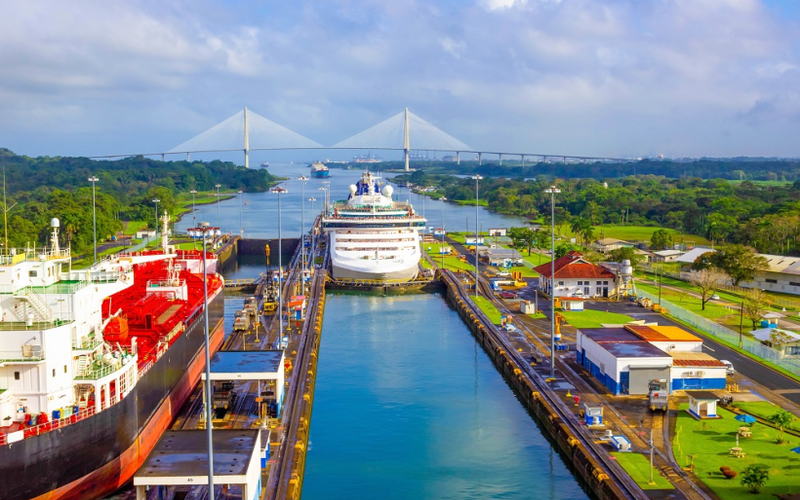
The Panama Canal is anticipating a rise in maritime traffic as disruptions from the ongoing conflict in Iran impact the global oil and energy supply chain, according to Dr. Ricaurte Vásquez Morales, the canal’s administrator.
Morales explained that the Panama Canal is a key route for transporting liquefied natural gas (LNG) from the United States to Asia. He noted that following the war in Ukraine, U.S. LNG exports that previously went to Europe have been redirected to meet global energy demands, and Middle Eastern suppliers such as Qatar typically supply Asian markets.
Morales said the canal is expected to see “traffic come up a little bit,” particularly for shipments moving from the U.S. East Coast to Asia. While the Strait of Hormuz handles approximately 21 million barrels of oil per day, around one-fifth of the world’s total, Panama Canal shipments average just over 2 million barrels daily.
The canal has the capacity to handle increased volumes, Morales said, pointing out that prior U.S. tariffs under President Donald Trump had already boosted canal traffic as exporters front-loaded cargoes to avoid additional duties, especially during the holiday season. He added that inventories in Asia have largely cleared after the Lunar New Year, creating room for additional shipments.
The rise in traffic comes amid broader U.S. interest in the canal. President Trump has previously expressed a desire to reacquire the trade route, originally completed by American engineers in 1914. Panama took full control in 1977, with joint U.S.-Panamanian management continuing until 1999.
Separately, American asset management firm BlackRock has been attempting to purchase two Panama Canal ports from CK Hutchison, a Hong Kong-based company, though the transaction has not yet been finalized.
Officials say the canal is prepared for higher shipping volumes and continues to play a critical role in global energy and trade logistics, especially as geopolitical tensions disrupt other major maritime routes.

Comments
No comments yet. Be the first to share your thoughts.