
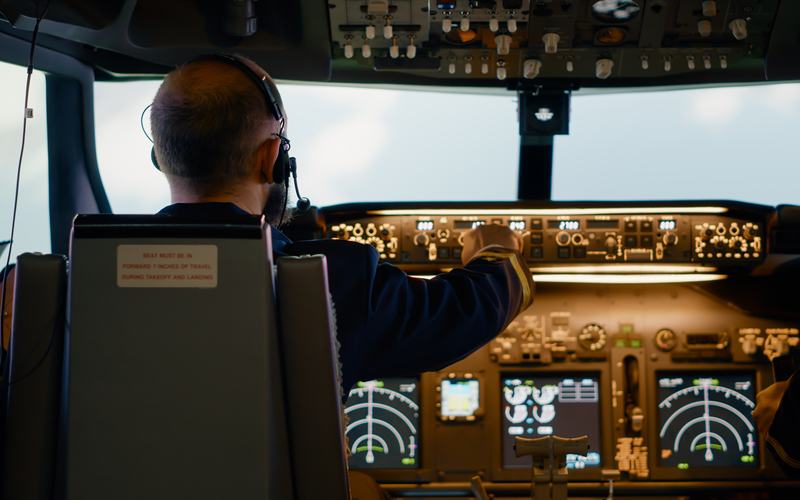
Airline pilots operating in the Middle East have voiced widespread fears of employer retribution if they refuse assignments due to safety risks from the ongoing Iran war. Ron Hay, president of the International Federation of Air Line Pilots' Associations (IFALPA) and a Delta Air Lines captain, told Reuters there is "an underlying fear of retribution."
Pilots from Lebanon to India worry about sudden airspace closures caused by missile or drone strikes, lack of clear risk guidance, and even post-landing dangers such as bombed roads near airports. In Beirut, some pilots reported that "the roads between the airport and their house had been completely bombed," leaving them unsure how to get home, Hay said. The United Nations aviation agency issued a bulletin Thursday warning that personnel in conflict zones face elevated stress, anxiety, and fatigue, which are "safety critical."
IFALPA published a position paper this week reminding airlines that pilots must have a "final and non-negotiable" say on operating in war zones without facing penalties. Hay noted that some pilots fear outright dismissal, while others could simply go unpaid for skipped trips: "Don’t fly the trip and you don’t get paid for it." He criticized a weak safety culture in the region, stating, "That’s been lacking in the Middle East region for quite some time and it’s just been exacerbated by this conflict."
The concerns arise amid a U.S.-Israeli conflict with Iran and hostilities between Israel and Hezbollah. A two-week ceasefire announced Tuesday faces ongoing challenges from continued attacks. The European Union Aviation Safety Agency has extended restrictions barring European airlines from Gulf airspace over the United Arab Emirates and Qatar until April 24. However, carriers based in Dubai and Doha, along with Indian airlines, continue flights through dedicated corridors.
In late March, Indian pilots affiliated with IFALPA urged Air India's regulator to suspend Gulf operations pending a centralized risk assessment; the airline now relies on daily external consultants. IFALPA has member associations in Bahrain, Egypt, Israel, Kuwait, and Lebanon, but major Gulf carriers in the UAE and Qatar remain non-unionized, contributing to pilots' reluctance to speak publicly.
Hay emphasized that pilots need encouragement to raise safety issues, a practice he said has long been deficient in parts of the region.

Comments
No comments yet. Be the first to share your thoughts.