
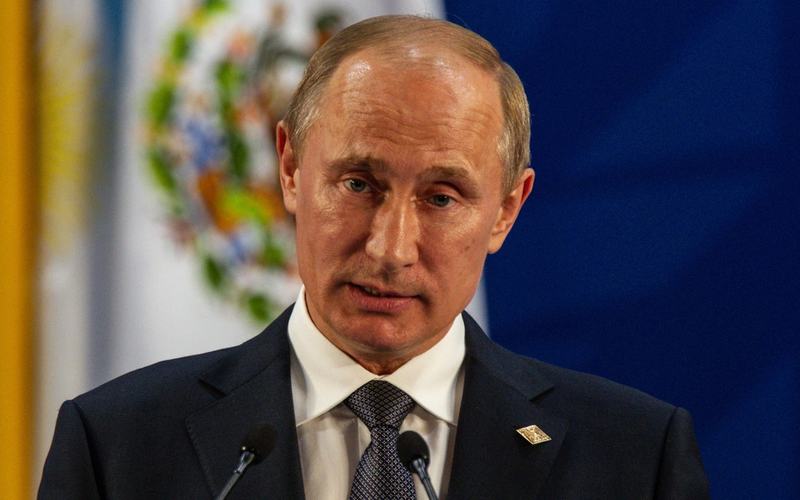
Russian President Vladimir Putin has proposed a trilateral summit with President Donald Trump and Chinese President Xi Jinping to discuss ending the four-year war in Ukraine, according to a Wall Street Journal report published Sunday. The proposed meeting could take place next month in China, but Trump has not agreed to attend.
Putin reportedly raised the idea during an Oct. 9 phone call with Trump, according to a former Russian intelligence officer briefed on the discussions. That conversation also produced an agreement for the United States to purchase Russian diesel fuel and help facilitate its sale on global markets.
The proposed summit would exclude Ukrainian President Volodymyr Zelenskyy, raising concerns that Washington, Moscow and Beijing could discuss Ukraine’s future without the participation of the country at war. The proposal also offers Putin an opportunity to capitalize on improving relations with Trump and strengthen Russia’s position in negotiations.
Kremlin spokesman Dmitry Peskov confirmed that discussions about a possible meeting were underway, but emphasized that no final agreement had been reached.
“There is no clear understanding yet regarding the meeting itself or its potential agenda,” Peskov told the Journal, adding that all three parties acknowledged the possibility of such a gathering.
Russian officials have reportedly suggested holding the summit alongside the Asia-Pacific Economic Cooperation meeting scheduled for Nov. 18-19 in Shenzhen, China. Moscow has approached Beijing through diplomatic channels, and Chinese representatives have indicated they would not object if Trump agreed to participate.
A meeting would also allow Xi to present China as a central diplomatic player in efforts to resolve the conflict. Yun Sun, director of the China program at the Stimson Center in Washington, said Beijing wants to be viewed as a leading power capable of mediating between Washington and Moscow.
The proposal comes as Trump pursues efforts to end the war while seeking to ease energy costs for American consumers. Earlier this month, he reached an agreement for the United States to purchase Russian diesel, and on Friday he waived major sanctions authorized under legislation he signed in September.
The sanctions decision drew support from some Trump allies but criticism from lawmakers in both parties who argue that economic pressure on Moscow is necessary to secure a favorable peace agreement. A senior White House official told the Journal that Trump acted after determining there were few other options for lowering fuel prices.
Energy analysts have questioned how much the Russian diesel arrangement will reduce prices, arguing that the war with Iran remains a major driver of rising fuel costs and that the additional Russian supply may have a limited effect on global markets.
Trump defended his approach Sunday, saying he did not want additional sanctions to undermine negotiations with Putin.
“I am in the process of negotiating Peace in the war between Russia and Ukraine, and don't want to do anything that will drive, foolishly, Russia away from the bargaining table,” Trump wrote on Truth Social.
He also said Moscow had provided relatively little assistance to Iran and indicated that he wanted to preserve that restraint.
No summit has been formally announced, and Trump’s participation remains uncertain. It is also unclear whether any eventual negotiations would include Ukraine directly or how the proposed meeting would address Kyiv’s role in determining the terms of a peace agreement.

Comments
No comments yet. Be the first to share your thoughts.