
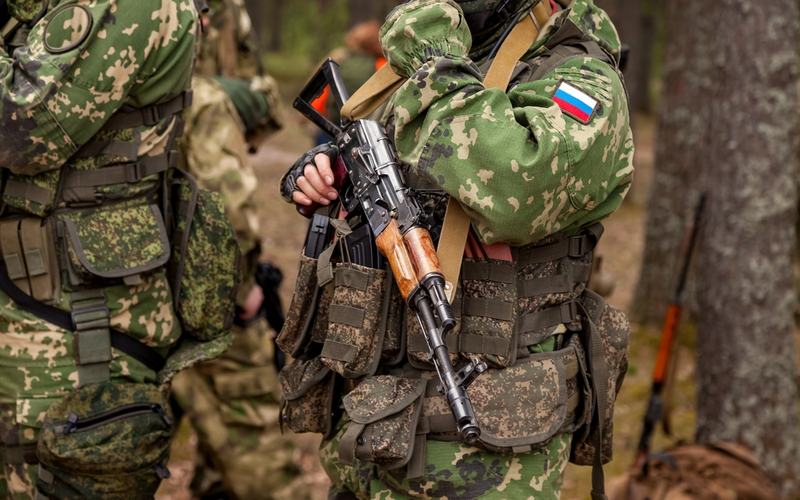
Russia may have lost more than 700,000 troops killed during its war against Ukraine, according to an investigation published Monday by independent Russian outlets Meduza and Mediazona. The estimate offers a broader accounting of the casualties sustained by Moscow during nearly five years of fighting.
Researchers analyzed leaked government death records and other statistical information to estimate the number of Russian military personnel who have died. Their findings suggest that at least 490,000 military deaths had been recorded in official data by early September, while an additional 200,000 soldiers may have died without their deaths being formally registered.
The researchers cautioned that the total remains uncertain and could not be independently verified. Russia has not published a comprehensive military casualty report since the early months of the invasion, leaving outside researchers to rely on fragmented records and statistical methods.
A major part of the investigation involved a database reportedly obtained by hackers who accessed Russia’s federal statistics agency, Rosstat. The material contained millions of death certificates, which researchers examined for evidence of deaths connected to military operations in Ukraine. Meduza and Mediazona said they cross-checked the records against other government information and their own databases before concluding that the material was authentic.
The estimate substantially exceeds earlier calculations. In May, the two outlets estimated that approximately 352,000 Russian troops had been killed through the end of 2025, using inheritance records and other government data.
A separate effort by Mediazona, the BBC’s Russian service and volunteers had identified roughly 286,000 Russian military deaths by early November. That count was based on publicly available evidence such as obituaries, cemetery records and announcements from local officials. The lower figure reflects the fact that many deaths are never publicly disclosed.
The latest analysis comes as Russian forces continue their offensive in eastern Ukraine, where advances have often come slowly and at considerable cost. Battles around Pokrovsk, in the Donetsk region, have been among the particularly intense engagements as Russian commanders attempt to weaken Ukrainian defensive positions through repeated assaults.
Moscow has worked to replenish its ranks through recruitment campaigns that offer large financial payments to men willing to sign military contracts. Russia has also drawn personnel from poorer regions, prisons and earlier mobilization efforts. Researchers have documented military deaths in communities across the country, including remote areas far from the front lines.
The scale of the reported losses raises questions about Russia’s ability to sustain its operations over the long term. President Vladimir Putin has largely avoided another broad mobilization since 2022, a politically sensitive decision that could bring the war more directly into the lives of Russian families.
Russia has continued fighting despite the casualties, relying on its larger population, defense industry and ongoing recruitment. Ukraine has also sustained heavy military losses, but neither side provides a complete and reliable account of its own dead and wounded. Both governments routinely claim much higher casualty figures for the opposing military.
The human cost is also reflected in civilian deaths. The United Nations has documented thousands of civilians killed in Ukraine and warned that the actual number is likely higher, particularly in Russian-occupied territory where independent investigations are difficult.
The casualty estimate arrives as President Donald Trump continues efforts to negotiate an end to the conflict. Talks remain complicated by disputes over territory, security guarantees and the terms of a potential settlement. Ukrainian President Volodymyr Zelenskyy has said any agreement must preserve Ukraine’s sovereignty and protect it against another Russian invasion, while Putin continues to demand territorial concessions from Kyiv.

Comments
No comments yet. Be the first to share your thoughts.