
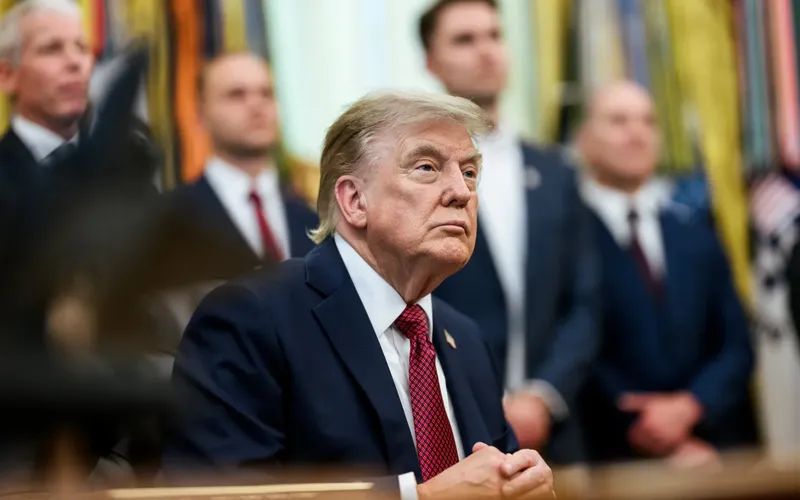
President Donald Trump has given his administration up to 60 days to evaluate the economic impact of sanctions and tariffs targeting Russia, leaving the future of the measures uncertain after he signed an order waiving key provisions a day earlier.
Trump addressed the issue Saturday at his Mar-a-Lago club in Palm Beach, Florida, saying he had not yet announced a final decision. “A lot of you don’t know what my decision is yet, but we’ll figure it out, and you’ll figure it out,” he told reporters.
Secretary of State Marco Rubio said the administration would use the review period to examine how imposing the penalties could affect both the U.S. economy and global markets.
Trump signed Friday’s executive order waiving key sanctions and tariffs under the Graham Act, legislation he signed last month amid pressure from lawmakers seeking to increase economic pressure on Moscow over its war against Ukraine. The measures, which included tariffs on Russian goods and penalties targeting countries that purchase Russian oil and gas, had been scheduled to take effect the following week.
The order did not specify the duration of the waiver. Rubio said Saturday that Trump had chosen 60 days to assess the consequences before determining how to proceed.
Ukrainian President Volodymyr Zelenskyy criticized the decision, warning that easing the restrictions could embolden Russian President Vladimir Putin and prolong the war.
Rubio also defended a separate agreement with Russia to increase diesel supplies to global markets as energy prices rise amid the war with Iran and disruptions to international fuel supplies.
“The only difference is how much of it the United States was going to get,” Rubio said, arguing that Russian diesel would reach the market regardless of whether American buyers participated in the arrangement.
Trump said Russia would initially supply more than 300,000 metric tons of diesel to the United States, with additional shipments expected in November and beyond.
Energy Secretary Chris Wright defended the agreement as a potential tool for encouraging peace rather than providing Moscow with an economic lifeline. In interviews Sunday, Wright argued that Russia would need to reduce its involvement in the conflict with Ukraine to increase the amount of diesel available for export.
“If Russia can bring additional diesel to the market and export it, it would benefit American consumers,” Wright said, adding that the arrangement could ease fuel costs while creating an incentive for Moscow to move toward peace.
Rubio said the sanctions review and diesel agreement reflect the difficulty of managing multiple international conflicts that are disrupting energy supplies and affecting the global economy.
“These conflicts around the world are starting to crash into each other,” he said.
The administration now faces a balancing act between maintaining economic pressure on Russia, protecting American consumers from rising energy costs, and pursuing a negotiated end to the war in Ukraine.

Comments
No comments yet. Be the first to share your thoughts.